
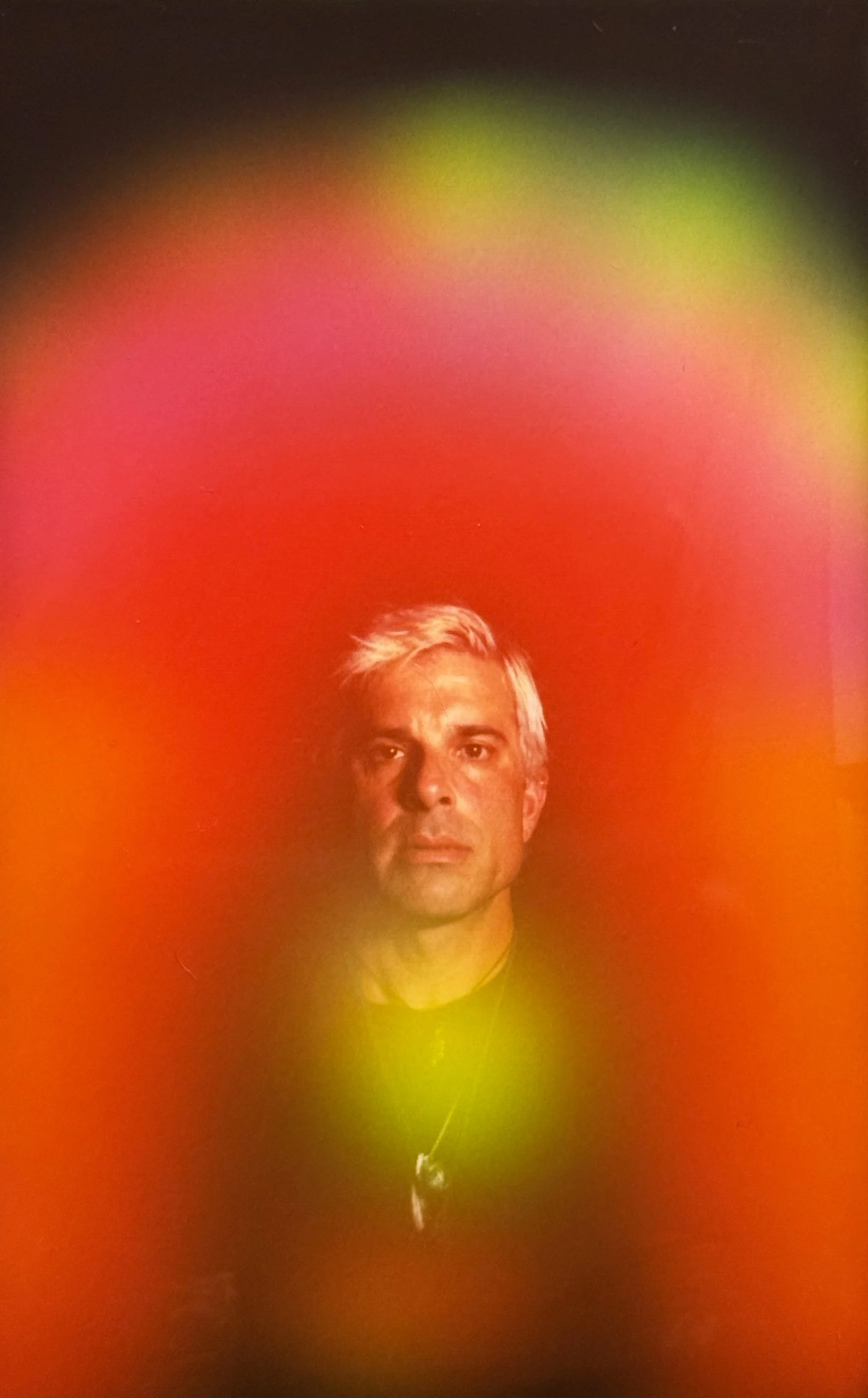
I'm a NYC-based interaction designer, editor and photographer.
I'm the founder and Editor in Chief of Cool Hunting, I'm the Creative Director at Largetail and I invented Freehands Gloves.
As winter sputters along in New York, we're finding plenty of reasons to be homebodies —an activity that calls for the appropriate soundtrack. Like Atlas Sounds' opener "The Shakes," some of the best music for the season seems engineered for playing on vinyl, a choice that helps conjure warmth on even the coldest, darkest nights. We also included some cheerful songs, perfect for the intimacy of always being indoors, and a few rebellious shouts ("Yella Diamonds" by Ricky Rozay, Waka Flocka and Ludacris on "Rich and Flexin'") to get you amped for work when you'd rather be snuggling. Remember, you have to be ready to be reborn come spring.
The dummy book motif has appeared on accessories from handbags to desktop boxes, only partially satisfying true literary geeks because, after all, they're only just replicating the covers. Book Chargers by Rich Neeley Designs, on the other hand, are made from actual vintage books outfitted with an impressively subtle power source for an iPhone or iPod. The USB-compatible hook-up tucks neatly behind the book's binding, and the dock itself is discreet enough to go unnoticed at quick glance.
Neeley and his wife, Brenna, travel around Southern California on what they call "book hunting" excursions. They've picked up tomes like a 1977 edition of "Alice in Wonderland", a manual called "Modern Dentistry" dating back to 1975, and a cloth-bound copy of Louisa May Alcott's "Eight Cousins" from 1914 for the antique bases they then refurbish to keep your modern technology fully juiced. The selection of books also includes contemporary releases bound in throwback past-edition covers, with titles spanning "The Picture of Dorian Gray", "Huckleberry Finn" and more.
Rich Neeley Book Chargers sell through the designer's Etsy shop, with prices ranging from $48-$55 per book.
Solid construction, clean lines and a no-frills approach to design drive LA-based bag brand, Ignoble. Centered on the assertion that the black backpack represents the true "essential carryall for the modern man," Ignoble makes their own with a focus on thoughtful design, style and personality. The current collection comprises five distinct versions, ranging from an oversized canister pack to a center-zip cocoon silhouette.
We got our hands on the Lenore Capsule Backpack, a multipurpose top-loader built for everyday use. The mid-back handle allows the wearer to carry it on the back or in hand as a duffel. Inside the large, double-zippered main compartment you'll find ample room for your gear, but no interior pockets or bells and whistles. The minimalist interior allows the bag to compress easily, making it nicely packable for travel.
The Cora Classic Rucksack caught our eye as well for its mountaineering look. The most technical bag in terms of pockets and compartments, the Cora features ultra-durable 400D high density nylon and a draw-cord opening with an adjustable hood.
Ignoble manufacturers their bags in America, explaining on their website that the line is "hand-assembled in small runs by a military-grade production facility." The collection is available online through Ignoble, with prices ranging from $165-$400. The Lenore and Cora Classic sell for $250 and $165, respectively.
A lot of ingenuity is required to rework a classic. Swiss company Kuhn Rikon recently had in-house designer Philipp Beyeler take on the iconic pepper grinder to create a fun design object informed by contemporary materials and ergonomics. The ratchet mechanism is more intelligent than a traditional twist grinder, and there's something to be said for a design that brings an element of playfulness to the mundane task of cracking pepper.
The grinder's personality resembles that of a small creature—a detail that's enhanced by the ratchet's chirping sound. We received a green one, which offers a nice pop of color and feels contemporary, but there are more classic colors available to fit any kitchen's scheme. Made from high-grade ceramic, the grinder can withstand the salt and moisture that erode a metal grinder over time. Ceramic also allows for high precision grinding from powdered dust to coarse chunks.
The Kuhn Rikon Ratchet Grinder is available from Amazon for $20.
We got to preview the rich new collection from Ligne Roset at Maison et Objet, which reflected a range of larger trends seen throughout the show. Here, we highlight Ligne Roset's take on some of the most intriguing concepts coming up in design.
Designers seem poised to explore the potential of felt and wool this year, using the material to cover chairs, make pots and more. In its most effective iteration, felt warms up furniture that may otherwise not be so comfortable.
Offering a sense of fragility and flexibility, the idea of stripes was prevalent, whether from stretched cords on a chair or bands shaped to form a pot. The Fifty armchair was modeled on the metal-and-cord recliner chair designed by Hans Wenger in Denmark in the 1950s. The modern Fifty features a straight back with woven "ears" protruding from either side of the head rest. Made from polypropylene plastic threads, the piece can survive inside or out. A gracious series of decorative pots called Bidum is made with stiff metallic strands covered in a satiny black finish.
Thanks to a special fabric called Tempête (tempest) interwoven with strong, metallic thread, and quality, downy filling, the refreshing Serpentine armchair by the young French designer, Eleonor Nalet is both comfortable and durable enough for the outdoors.
The Grillage series by the famed French designer, François Azambourg comprises ultra-light, lace-like chairs, armchairs and a table made from sheets of metal. The origami-style fold of the armchair makes it a particularly elegant piece.
The Dino serves as a sophisticated storage system with interior shelves and cabinets when closed, and a folding writing table when opened. The functional secretary is modeled after James Bond's cabinet, reconfiguring to form side drawers, a document tray and a set-up at the back to plug in a laptop or lamp.
The innovative, double-function table, Black Bird, can be positioned low to meet a sofa end or raised to a standard height for chairs. The tri-color shelves can stand vertically or laid horizontal, overlaid or articulated to one another.
The Ukomi Kimono Chair very successfully blends Scandinavian purity and geometric structure with a traditional Japanese covering. Styled to look like a kimono has been thrown over the seat, the chair features Japanese patterns between the creases, which are actually stitched in the traditional way of the kimono.
The highly original Peye table lamp and floor lamp reminded us of a hair dresser's drying helmet, but are actually inspired by Popeye the Sailor Man—the table lamp is named Olive. Instead of a traditional bulb, the light relies on invisible LED stripes beneath its oversized shade.
Sensitive to the cash-strapped culture lovers of the world, Recession Art began with the simple premise of uniting aspiring collectors with emerging artists. After three years of shows at Brooklyn's Invisible Dog, they have now opened RAC on New York's Lower East Side. Seated atop Culturefix, an artsy watering hole with adjoining event space, RAC combines a storefront shop with a permanent gallery.
"We wanted to bring together two groups of people we knew personally," says founder Emma Katz. "Artists who were making work but had no way to get it out into the world, and young art lovers who were maybe furnishing their first apartment and wanted access to original artwork." True to their mission, Katz and curator Melanie Kress stocked the storefront with prints and books by emerging artists, along with affordable original works.
The space has played home to a number of pop-ups over the years, but both Culturefix and Recession Art saw the benefit of a shared venue. "We get people to come into the gallery that might not usually visit an art gallery. Our goal is for anyone to feel welcome here—if you come for a beer or a concert you might end up buying a handmade pop-up book or a photograph. It allows us to work with many kinds of artists including musicians, performers and poets."
Kicking off things at RAC is an exhibition by veteran Recession Art artist Megan Berk. "Weird Party on the Other Side of the Hedge" shows scenes of Berk's native Los Angeles, the nostalgic dreamscapes tinged with an air of outsider skepticism. A friend of Recession Art, Berk also designed a totebag and limited edition print for the store.
Recession Art plans to continue shows at the Invisible Dog, and are currently taking submissions online for "Everything is Index, Nothing is History," curated by Melanie Kress. In an effort to build relationships with collectors, Recession Art also runs a Collector Club to keep the community abreast of artist activities, studio visits and private previews.
RAC
9 Clinton Street
New York, NY 10002
Against a backdrop lined with machine gears reminiscent of Charlie Chaplin's Modern Times bleached white, a parade of slipper-clad, bearded cavemen sleepwalk to the sound of a percussion march. This is how we are introduced to the Henrik Vibskov Autumn/Winter 2012 collection.
Vibskov's models appear in sharp contrast to typical menswear models' standards, hunched over with heads down. They wear some kind of futurist, helmet-like nightcap and carry bright, girlish handbags, their clothing maintaining a comfortable fluidity, from fabrics to cut to color.
Wool dominates the collection from top to bottom, perhaps a nod to the designer's Nordic heritage. Knit sweaters and jackets have the look of garments home-made and hand-knotted by the fireplace, while Vibskov brings back the marled and heathered effects on other pieces. Pants comprise mostly leggings, plus trousers with a Turkish-style dropped inseam. Huge overcoats sport pocket-like hoods and draped backs with zipper accents.
We came away from the collection thinking about the colors of Fauvism painting—mustard yellow, a range of browns, rusty reds and greenish blue. Vibskov seems to channeling a man out of the 1950s, but in a futuristic way. His is a modern man, daring enough to blend vaguely feminine accents—leggings, shoulder pads, handbags—into his wardrobe, and take risks with bouffant cuts and cosmonaut ensembles.
Titled "The Shrink Wrap Spectacular," the free-spirited collection seems to focus on contrasts—the combination of skinny cuts with extra-large pieces, the range from dark solids to zebra prints, clothes that go from day to night—as Vibskov blends styles and silhouettes from a wild variety of worlds.
With his cavemen models trudging through a mechanized set, the designer seems to present more of a raw archetype than yet another stereotype of modernity.
In the new e-book "Design Voices," Dutch designer Maarten Baas points out that 20 years ago, "designing was quite anonymous as a profession." Now, not only has the importance of design become more visible outside of the creative industries, but designers themselves have also gained distinction as innovative problem-solvers.
Curious about how some of the industry's most notorious talents see the future and the "larger design arena today," journalist—and Cool Hunting contributor—Anna Carnick asked Giulio Cappellini, Ross Loveg- rove, Massimo Vignelli, Stefan Sagmeister, Maarten Baas, Tokujin Yoshioka, Dror Benshetrit and Milton Glaser to offer insight into how the profession has changed, and where they think the industry is headed in the years to come.
The thoughtful and timely e-book sells from Amazon as a Kindle Edition ($3), and you can check out some highlights from the "Design Voices" interviews below.
A designer known for injecting technology and science into his materials-driven designs, Ross Lovegrove predicts that in the future people will stray from issues "purely centered on glamor and expression of personal wealth" and instead look to new industrial processes to shape things. "We will witness an explosion of sculptural forms in society based on the digital process and industrial economics," he says.
The industrious, multi-platform Austrian designer Stefan Sagmeister offers his thoughts on the fate of photography and books, saying "The still image will continue to lose its importance. Everything that can be animated will be animated. The printed book will die."
As the creator of the iconic "I Heart NY" logo and co-founder of Push Pin Studios and New York magazine, Milton Glaser lives as a graphic design legend. In "Design Voices," he expertly sums up design as the "fundamental activity of the human species to achieve results," adding that "the official guideline of design is effectiveness."
One of today's game-changing industrial designers, Dror Benshetrit sees today's design "at a fascinating point", and believes people are beginning to see it from a more holistic perspective. "Today, it seems that more and more, people need to compartmentalize others and put them in certain boxes," he says. "I think that's going to change. We are going to break that, and we're going to say, 'Well, I'm a designer, I'm an artist, I'm an inventor, I'm a machinist, and I'm a poet; I'm all of that.'"
All images courtesy of the designers.
On a recent trip to Gstaad with Bentley (more on that next week), I had the pleasure of meeting the team from Zai, the high end, handmade Swiss ski manufacturer. Patrick, Daniela and Thomas (pictured here) all happened to be wearing incredible ski suits. As it turns out, Zai has recently branched into outerwear with the Cassacca, an aesthetically subdued, technically advanced outfit for the slopes. In teaming up with exclusive Italian garment and fabric manufacturer Loro Piana, Zai is able to select from the world's finest wools and cashmeres for the Cassacca. This complimentary alliance is founded in Zai's commitment to innovation and design and Loro Piana's uncompromising dedication to material standards and craftsmanship.
For the main upper Zai uses a combination of 94% wool, 5% cashmere and 1% elastane to give the wearer proper freedom of motion while skiing. The fabric blend is treated by Loro Piana's Storm System, laminating a pliable membrane and sub-layer of microfiber for additional insulation. Once completed the fabric is treated with Rain System, a unique waterproofing process effective at both keeping moisture out and allowing the material to dry surprisingly fast.
As a garment first and foremost it's engineered to enhance one's skiing experience, however the Cassacca caters quite well to the Swiss tradition of après activities. The understated aesthetic is sleek, while avoiding being too sporty—a mark that's not easily hit in the outerwear world. This "essential" design is limited to just four earth-tone colorways to keep in line with Zai's traditions in wooden ski making.
Zai's limited production skis expertly blend natural and man made materials for a superior ski. While the weekend warrior can appreciate the beautiful crafstmanship, these skis will be most appreciated by those working towards a triple digit day season. Standouts from the winter '12 ski collection include the classic Testa with a walnut vaneer and the revolutionary Nezza, made almost entirely of an innovative compound called Zaira.The two hand built skis represent Zai's superlative use of material on opposite sides of the design spectrum.
As with all superior things in life, quality comes at a price. Zai's Cassacca sells online for $4225 while their handmade skis are officially sold through retailers in over 19 countries. Use Zai's national directory for a list of dealers in your region.
Ever since seeing "Altered States" back in the day, we've held off on trying sensory deprivation tanks. Watching Willam Hurt's character devolve into a primitive man through repeated psychedelic experiments seemed like a red flag for curious newcomers. A recent trip to Portland's Float On has changed all that. The supremely chilled-out center invites visitors to come and enjoy the health benefits of a good float, which run from dopamine rushes to skin rejuvenation.
With four tanks, Float On holds the distinction of being the largest tank center on the West Coast. We opted to try one of the two "ocean" tanks, which are built with six feet of head room for anyone with claustrophobic tendencies. The team behind the center, Quinn Zepeda, Graham Talley and Christopher Messer have created a haven of calm with an inclusive ethos—cash-strapped customers may work shifts to earn float time, and artists are allowed to float free of charge.
After stripping down and showering, you enter the tank, where the water is warmed to match the ambient air at 93.5 degrees Fahrenheit. The 40% salt content makes the water extremely buoyant, keeping you afloat in a mere 14 inches of water. The environment is pitch black and silent, thanks to wax over-ear earplugs. You are encouraged to lay in whatever position feels most comfortable for the 90-minute sessions and, if the tank isn't booked, they'll let you stay in for as long as you please.
After a little more than an hour in suspended gravity—which they claim releases enough pressure on your spine to lengthen your body by an inch—the mind gives over to theta brainwaves, oscillating between consciousness and unconsciousness. It is in this state that practitioners report mental breakthroughs of a creative and psychedelic nature due to decreased level of cortisol, the chemical in the brain that causes stress. Once the initial "What the hell am I doing?" feeling passes, all sense of time and environment gives over to pleasant calm as the loss of sensation shuts down most survival-related brain functions. Sensory deprivation makes the body lose track of time, too, so the float seems to last just a few minutes.
The session ends when music pipes into the tank to wake you if you've fallen asleep (I didn't), although you are encouraged to take your time when re-entering reality. While I didn't have what I would call a mental breakthrough during the float, it seemed to clear the way for my creativity to take a jump in the days to follow.
Float On
4530 Hawthorne Boulevard
Portland, OR 97215
Designed by master guitar-builder Jeanmichel Capt with the exceptional creativity and skill he employs to sculpt musical instruments, the JMC Soundboard creates a beautifully encased sound system that blends seamlessly into most any environment. Built with time-honored techniques used in making JMC guitars, the speaker blurs the line between art object and home audio system. The Soundboard has been around for some time now, but we only recently got to experience it in person—between the uncannily thin silhouette and masterful uniformity of sound, it certainly struck a chord.
JMC opts to use spruce that has been harvested of 350-year-old felled trees in the Swiss Risoud Forest, rather than more exotic woods that may cause deforestation. With the chosen wood of JMC's legendary luthiers, the lightweight but rigid body—carved paper-thin—creates excellent response to vibrations, offering the listener a concert-like experience unique to the Soundboard.
The convex surface design disperses sound evenly throughout a room, as opposed to traditional speakers that need twice the number of units to achieve a similar effect. A sophisticated omnidirectional wave creates what they call a "pervasive musical climate", in which volume and resonance stay precisely uniform whether you're standing across the room or with your ear up to the Soundboard.
While we've seen other home audio adaptations available on the market it seems the JMC Soundboard provides the most elegant solution to cumbersome speaker systems. Check JMC online for their expansive list of dealers worldwide.
When a creative brief tasked them to "make something connected to the Internet that doesn't live on the screen," Foundry, a small research team at Mint Digital, came up with Olly, a scent-based system rewarding social media activity or, as they describe it on their site, a "web-connected smelly robot."
Olly links up to web-based social applications and emits a fragrance—thankfully, one that you choose—when you receive emails, re-Tweets, instant messages, and various other pings across the channels of social media. Exploring the notion that smell is one of our most under-used senses in an over-stimulated world, Olly is a modular system that will have its own website from which the user can customize the way the smelly robot responds to web stimuli.
Joining Olly on Kickstarter is Molly, a robot Foundry will release today that graduates from scent to candy, dispensing one's chosen sweets upon receipt of virtual notifications.
Molly operates in a similar way to Olly, which for scents stores a removable tray and a small interior fan to release the aroma. The user can customize various modules to assign different fragrances to different alerts—perhaps something sweet to soften the blow of a bill from your accountant, or a loved one's perfume or cologne for their notes. According to the team at Foundry, "Olly wants to be fiddled with."
While Olly works around a more cerebral sense, Molly is all about indulgence. Together, the robot pair might just serve as the ultimate carrot and stick for the digital generation. Olly and Molly (available later today) sell on Kickstarter for $50 each. The project will only come to fruition if they make the $35,000 goal, so pledge now.
Premiering last night, HERE is a dreamy short film produced by Waris Ahluwalia for The Luxury Collection Hotels & Resorts. A romantic treasure hunt of sorts, the film stars Agyness Deyn, whose journey takes her halfway around the world following clues that lead to her mate. Directed by Luca Guadagnino and shot in only nine days, the team traveled from the Equinox Resort in Manchester, Vermont to the Phoenician Resort in Scotsdale, Arizona and finally ended at the Royal Hawaiian in Waikiki.
A puzzle, a journey and an adventure in luxury, the 15-minute film is warming and meditative. The piece is timeless—there are no hints of when, only where. The hotels are featured, but not promoted. It's a simple love story full of happiness and levity. The costumes, sets and lighting are all gorgeous. HERE is a piece of art, but HERE is also a film commissioned by the brand and marketing group at Starwood's The Luxury Collection. While we're not surprised Waris and his team could produce such a great work, it's a pleasure to know that an organization like Starwood could step back and have trust in the creative process, letting a piece like this come to life.
Honda's NC700X, the newest addition to the Japanese manufacturer's line, is a crossover bike designed to give riders the best of both worlds. Highlighting efficiency while retaining sports performance, the motorcycle is equal parts commuter, street racer and weekend warrior. The bike is what you make of it—an open platform approach to transportation that is sensitive to rider demands. In a sign of its universality, the bike will be distributed globally—a rarity in the motorcycle world—with the idea that this model can handle remote country touring and European cities alike.
In the development of the new engine platform, Honda leveraged design elements from their Fit automobile's 117-hp 1.5l, 16-valve SOHC i-VTEC engine. This mechanical cross-pollination significantly reduces development and production cost, which explains the motorcycle's very accessible price point. Other innovations include an impressive built-in 21-liter compartment for helmet stowage where the gas tank is typically located—resulting from moving the 3.7 gallon fuel tank under the seat, and installing the engine with a slight tilt. The digital LCD instrument panel presents operating data in an easy-to-use format that sacrifices analog looks to communicate information faster than traditional dials. While the standard version sticks to manual shifting, The NC700X DCT ABS version features optional automatic dual-clutch transmission with two automatic modes, as well as a paddle shifting mode that makes for easy control of the bike, especially in high traffic driving.
The NC700X is styled like an adventure bike, but overall the model is suited to city dwellers. Loads of accessories make it easy to convert this narrow-body bike into a respectable touring bike, with extra-large wind screens and 29-liter saddlebags on offer. The chassis design keeps weight centered and low, allowing for spry handling through turns. While the small size and multi-functionality will appeal to newcomers, the 670 cc bike remains respectable. Focused on efficiency rather than power, Honda is able to boast 60+ mpg fuel economy in the new model.
The price point for the NC700X promises to mix up the middle market, starting at $6,999 ($8,999 for the automatic transmission and ABS package). This lowers the barrier of entry of a full-featured bike for first-time and commuter buyers, promising to open the market to a new group of riders. The NC700X will hit dealers summer 2012.
The building that houses St. George Spirits in Alameda, CA may look like a naval air hangar on the outside, but inside lies a vast warren of copper pot stills and casks filled with artisanal spirits. St. George was founded in 1982 to make eau de vie fruit brandies, and the process of making handcrafted eau de vie continues to influence their development of other spirits. Since its inception, the distillery has evolved into a comprehensive operation making whiskey, gin, rum, Qi Tea Liqueurs, and is even developing an aged balsamic vinegar.
Master distiller Lance Winters has been on a 16-year journey to make magic at St. George, and he describes his work as if he were tinkering away in some kind of fantastical workshop. With no shortage of projects on hand, Winters is currently planning a move to a much larger laboratory and is working on the release of a single malt whisky with a special bottling from a single barrel later this year, in celebration of their 30th anniversary. In about two years, Winters' organic corn rye whiskey and California bourbon will be ready for release. We caught up with Winters to get a tour and hear more about his successful passion.
This is where most of our projects start. I run individual botanicals through one of these small stills to be able to see how it is going to express itself. I have one friend who is growing organic rye up by Mt. Shasta. We have brought down some of that rye, mashed it in here, fermented it and distilled it in the stills and it’s lovely. I also decided to make bourbon. Bourbon is a lot of fun because you have so much latitude to play around with the grain bill. It's like making chocolate or coffee—bringing out different characteristics when you roast the grain.
Dave Smith is responsible for putting together our whiskey for bottling. He goes through and smells and tastes everything we've got and determines what is going to go into a given bottling. He is so good at it, I thought, what if he had access to a bunch of bourbon barrels? What could he do? So we went to a bunch of different bourbon distilleries. We brought 320 barrels back with us. It took him about three months to taste from all of them. He made notes and decided how they would best be blended together to be able to make a "super bourbon"—a Compass Box style of American bourbon. I think Compass Box is fantastic. We bottled ours under the name Breaking & Entering. We were careful to let people know that we did not make this, but we blended it. We love it.
This balsamic vinegar has been aging for 14 years. It's thick and syrupy. There is no way to short-circuit this process. I want to learn how to blow glass and make my own bottles.
Five years ago I started talking about how much in love I am with the parklands around here. My son was going to a day camp. I'd pick him up in the afternoons and the smell was pine trees and wild fennel, bay laurel, and dirt. I love that smell of the earth between the dry dusty component and the decomposing mulch of the woodlands. I thought that would be something really great to distill, but then I shelved the idea. A couple of years later, I started thinking about making a gin with the flavors and smells of the forest. They all have an affinity for some traditional part if the gin profile. If you've hiked Mt. Tamalpais you will recognize the profile. We bring in Douglas fir and infuse it in high proof alcohol. We have been drawing it off and taking that liquid and putting it in the stills. It tastes like a sweet Christmas tree.
We also make a gin called Botanivore, a very broad, beautiful refreshing style of gin designed for tropical climates that is great for gin and tonics. As soon as you throw a little tonic in there, the dill seed in it explodes making it very green and herbaceous. It's really good in a martini too.
At the opposite end of the spectrum is the one we start with a pot-distilled rye. It's like a rye whiskey that hasn't touched a barrel yet. Rye already has a lovely peppery nature to it that helps bump up some of the juniper berry qualities. We use 50% more juniper berries and crack them open to get more surface area. We add black peppercorns, caraway seed, lime and grapefruit peel. It's my favorite cocktail base for a Negroni or to treat is as a rye in an Old Fashioned.
Our customers don't need to be experts, they just need to know what they like and what makes their palette tingle. We need to be experts at what we like and that's basically where everything starts. We've been able to find enough people who think like us to keep us going.
Cold Spring Apothecary founder Stacey Dugliss-Wesselman cultivated a special knack for ingenuity during her childhood in the Catskills, where the closest store was 45 minutes away. Later, as a hair stylist in Brooklyn, with a background in both cosmetology and nursing, she began sharing with her clients the blends of oils and remedies she'd concocted and soon garnered a devoted following.
"After much encouragement to sell my products, I decided I was going to do it...so I locked myself in the Cold Spring lab—the kitchen in a second apartment we were renting—to design the line," says Dugliss-Wesselman. Cold Spring Apothecary was born in 2010, bringing together her deep commitment to safe, chemical-free and nourishing hair and skin products in a small-batch line. In April 2011, CSA opened its first retail location in the Hudson Valley town for which it's named, below the lab and manufacturing center where all the products are made in a strictly sanitized environment. "We work in small batches of 6-24 bottles at a time," says Dugliss-Wesselman. "Everything is carefully mixed by hand so we don't use crazy mixing machines or filling machines, we feel that we have greater quality control by doing so."
We were particularly fond of the haircare products we got to try—the Citrus, Ginger and Vanilla Dry Shampoo and the Citrus and Ginger Sea Salt Spray, one of Cold Spring's signature items and Dugliss-Wesselman's personal favorite. As far as dry shampoos go, this one did the trick with an intoxicating scent, giving our day-after locks the proper boost to last a little longer before the next full-fledged wash. Those with lighter hair will have an easier time with the pale powder, which requires more careful rubbing in on brunette and dark hair. The sea salt spray infuses a nice texture with the added bonus of an ultra moisturizing formula—an unusual benefit for this particular genre of styling product. Cold Spring started with shampoo, which continues to be a top seller in all natural scents that include basil and hibiscus, lavender and honey and geranium.
Cold Spring Apothecary—which, true to its name, incorporates a medicinal component to each of its products—also includes skincare, body care, fragrances and home fragrances and candles, all free from parabens, harmful sulfates and synthetic scents. The entire line is available from the flagship shop and select stockists, as well as Cold Spring Apothecary online, which also includes extensive information on all CSA products and ingredients.
The network of transit apps now available has grown nearly as complicated as the oft daunting subway systems they were created to navigate. Certain New York-focused programs we've used have their strong points—New York Subway features an augmented reality function for above-ground navigation; NYC Exit Strategy maps out which cars to ride for fastest transfer and iTrans shares service changes directly from the MTA. The relatively new Embark stands out by simplifying the system with a "tailored trip" concept.
Originally developed for San Francisco, Embark now serves Chicago, NYC, London, D.C. and Philadelphia, as well as the Long Island Railroad and New Jersey Transit systems through a series of location-specific apps. Most notably, Embark functions without a data connection, allowing users to plan new trips while underground. The user interface makes station-to-station navigation fast and easy, and trips can also be designed around address and landmark destinations. Linking with local transit announcements, Embark sends push notifications to keep users apprised of relevant delays, warnings and service changes.
Embark CEO David Hodge believes that, in the age of the smartphone, people shouldn't have to think about how they're going to get somewhere. Embark minimizes time spent on the app, streamlining A-to-B navigation with its offline functionality. In some ways, Embark does less than other similar transportation apps, but is able to set itself apart through intelligent navigation. Small details like planning trips based on arrival rather than departure and walking speed adjusted by city also give Embark a crucial edge.
Users are also able to Tweet, text and email itineraries so that friends can know when to expect each other. The free app looks to include transportation systems outside of railways in the future, and will expand to public bus schedules and routes next. With a flood of Olympic Games tourists set to hit the London Tube next summer, Embark hopes to ease the movement of unfamiliar travelers in the European metropolis.
Embark is available for download from iTunes.
We have always been big supporters of Vimeo and their mission to provide a high quality, creatively focused platform for video sharing. We are super excited to announce that today Vimeo is launching it's latest iteration with New Vimeo. The new platform entails a complete redesign from top to bottom. The new user interface was built with all new code, has brand-new features and a fantastic new look. The first redesign since 2007, this major overhaul marks Vimeo's push to grow and reach a larger audience by making it more accessible and adding some great new features.
The basis for New Vimeo revolves are putting the video first. In lieu of the Inbox, when you log in you are now presented with your Feed, a streaming list of videos from all your contact and subscriptions. The feed allows you to watch and interact with those videos in place, including the ability to like, share or comment without having to visit the actual clip page. The feed is super clean and open, it has a very pleasing effect on the eye and incorporates the various buttons and tools in a subtle, intuitive manner.
The language of the site has also changed. Adopting terminology more in line with social networks the site loses subscriptions and instead let's users "Follow" each other. Anyone you follow will appear in your feed and act in the same manner as subscriptions and contacts did in the previous version. This simplification makes it much easier to manage your network on site and is more digestible for new users coming from other social platforms. The video still remains the focus of the experience, by keeping user interaction simple you can do more without straying from the content.
Content really is king in this new layout. Gone are the tabs upon tabs and long scrolling video lists with options layered one on top of the other. Videos are now presented front and center on clip pages, a drop down bar on the top of the site lets you browse other videos from your feed, more videos from that user or a wide variety of other filtering options. We spoke with Blake Whitman, Vimeo's VP of Creative Development, who gave a walk through of the new site. The word "granular" came up often and it rings true, Vimeo managed to simplify their layout but the attention to detail and level of consideration that went into the new UI is outstanding.
Over a year in the making New Vimeo has some new add-ons that are sure to gratify their faithful base. One of the most exciting new features is the ability to upload multiple videos simultaneously. To make sure you don't choke your internet with your line up you can set throttles on your data usage when uploading which, while not earth shattering, is a very useful detail. It's hard to pinpoint new features considering the metamorphosis everything seems pretty fresh but there is a new search criteria and filter that lets you sort by the license associated with the video. In line with this there is an entire category dedicated to the Creative Commons license in a push to educate users about this form of copyright and make it easier to track down royalty free content.
Overall the Vimeo team did an excellent job moving the site into it's next phase. A lot of user feedback was incorporated into the redesign making sure it will satisfy the faithful but it has a fresh enough look to draw in a new crowd. The focus on accessibility and keeping content center stage show a great deal of insight from the team and we are excited to see more new features are they role out. Head to the site to pre-register for New Vimeo, where you can migrate an existing account or sign up as a new user.
There are a few essentials you never leave home without: your keys, your phone, your wallet. These represent the survivalist accessories of modern life, and they should be carefully considered—after all, they remain the stronghold of minimalism and functionality in a world of excess. The following leather goods are handsomely spare selects that do everything required and nothing else.
The size of your wallet can say a lot about you—overloaded back-pocket bricks indicate hoarder tendencies, and anything requiring a snap release signals high maintenance. This pliable option has three enclosure slots to keep cash and cards separate and the durable, American-made Korchmar leather is fully tanned with vegetable dyes, resulting in a rich color. The handcrafted wallet is available from Koyono for $129.
In a world dominated by cards, it may seem excessive to carry a wallet at all. Besides providing stellar protection for your phone, this case comes with a slot to carry the shortlist of everyday cards along with space for cash. The felt liner is kind against scratch-prone screens while the tough leather outer amps up the heritage look. Made in Italy, the wallet is hand-finished by Florentine craftsmen and can be found at Hard Graft for $89.
We've always felt that bulky fobs are unnecessary. Lanyards serve as the perfect key accessory, providing ease of access without adding too much weight. Alice Park's calfskin option comes in a rainbow of colors to fit your personality. The brass and nickel rings link with a detachable hook to prevent fiddling with key rings, while the generous length allows you to latch onto purse handles and belt loops if you don't want to rock the drape. The lanyard is available at OK for $45.
While augmented reality interfaces have had their moment on smartphones, the automobile windshield is a potentially more useful place to overlay contextual information. Mercedes' Dynamic and Intuitive Control Experience (DICE) offers a look at how the manufacturer envisions getting everything from traffic data to information about passing landmarks. The concept ditches buttons and touch screens in favor of gesture-based controls that communicate information while driving. At CES, convention-goers were able to get a feel for the system in a virtual reality cube set up by Mercedes. While the concept might seem far off, in another hall at CES display manufacturers were showing their first prototypes of clear glass screens capable of full LED display—the missing link to making a concept like this real.
In an apparent nod to science fiction, pointing to a passing building brings up a short description along with the option to save the location to your favorite places. Mercedes is quick to push the social media angle, demonstrating how friend updates can be displayed for quick reference while driving. This being an in-car system, media playback takes a large part with browsing and song selection enabled.
While making a system like this real clearly requires balancing the need to avoid driver distraction, DICE shows the awesome potential of augmented reality in the years to come. Check out the newly released video to see DICE in action.
The first in a series of artist-curated exhibitions at NYC's Joshua Liner Gallery, "Resolve" gathers together the peers and influencing figures of the highly skilled painter Tony Curanaj. Each of the 25 contemporary artists included in the group show is classically trained and collectively they demonstrate the diversity of Realism.
"Resolve" explores the human experience artists have with a subject, and the truth in their observations. "Great art expresses life," says Curanaj, who is more interested in works that convey a person's sensitivities than those that are focused on the medium, or, as he puts it, "art about art."
Considered experts of their craft, the artists, which include one photographer, two sculptors and 22 painters, have become completely involved in creating work that reflects their distinct technical prowess. Curanaj aims to show the sincerity and beauty of work made by the hand of a skilled artist. "When you're painting from life, it's like a high-wire net with nothing underneath you," he says. "You could fuck it up at any point."
The show also makes a different argument about the idea of conceptualism, a term Curanaj believes has been misused for years—especially as it relates to Realism versus abstract art. "There's a misconception that Realism isn't conceptual," he says. "I think Realism is of the highest, utmost conceptual ideas because you're continuously conceptualizing what's in front of you and putting it down as notes and feelings, trying to depict what is life, what is reality." He also feels that the more deeply profound an idea, the more specific the depiction should be. The artist should have a very clear solution for the concept in order to fully get the idea across and relate to the viewer.
The show's title refers to each artist's unwavering creative direction and continuous refinement of their craft. Each notable in their own right, alongside Curanaj, the group includes Graydon Parrish, Jeremy Mann, Jefferson Hayman, Kim Cogan, Lee Misenheimer, Shawn Barber, Kris Kuksi and Jacob A. Pfeiffer.
On view for just one month, "Resolve" opens at NYC's Joshua Liner Gallery on 26 January and runs through 25 February 2012.
Driven by a lifetime of poor vision and years spent behind uninspiring frames, former vintage menswear dealer Jason Pollak founded Deja Vu Refinery to supply those like him with an iconic frame of the highest quality. From what he describes as a "closet full" of antique frames, Pollak drew on the idiosyncrasies—both positive and negative—of each to design his own ideal silhouette, the Debonair.
Every pair of glasses is handcrafted using cellulose acetate (zyl), a plastic material that lends itself very well to coloration processes—thus allowing Pollak to create numerous custom shades unique to Deja Vu Refinery (the Debonair is also available in classic tortoise and black). All frames come with traditional seven-barrel hinges and extra-long arms for that tip-of-the-nose look.
According to Pollak, the Debonair is "as good as the aviator or wayfarer paradigm shapes that fit with wardrobes from the 1920s, all the way up until now." In other words, Deja Vu Refinery's frames are made to pair just as well with a chambray shirt and Red Wings as with a designer suit. As for the name of the brand, Pollak says, "what I'm doing is essentially vintage reproduction. It's something you've seen before but better."
The line comprises more than 30 possible combinations of silhouettes with 10 custom colors and a handful of lens shades—clear, cobalt blue, polarized beer bottle green, deep purple, polarized beer bottle brown—in both prescription and non-prescription form. The Debonair is available online for $333. Plus, Pollak tells us Deja Vu Refinery is set to release additional men's accessories in the near future, so keep an eye out for more to come.
When it comes to a satisfying treat, simple is almost always best. Alison Walla's small Brooklyn-based baking outfit Butter + Love exemplifies that ideal with her line of shortbread and gingerbread fruit- and herb-infused cookies made from spruced-up family recipes.
Taking its name from a Norwegian proverb, Butter + Love was born from Walla's morning coffee runs to the Green Grape in Fort Greene. The discerning staff urged her to capitalize on her neighborly generosity and start selling the sweets she was bringing to them each day.
In six months, Walla has baked her way into six local stockists, and opened her own stall at the Brooklyn Flea in November 2011. This week, she opens an Etsy shop to share the cookie bounty with those outside the neighborhood.
We got to try a variety of flavors at CH HQ and were most impressed by the salted honey lavender shortbread—a classic, well-executed iteration based on the namesake ingredient. The rich cookie was a perfect balance of soft and crispy with a sprinkling of salt and sugar on top. The sandwich cookies—a heart-shaped raspberry lemon and blackberry lime stars—offered a flavorful update on the traditional Linzer tart, and pleased the crowd a bit more than the more unconventional savory-sweet marionberry rosemary sea salt flavor. The gingerbread moustaches offered just enough spice, and were pleasantly chewier than a typical snap.
Find Butter + Love at select Brooklyn purveyors or, starting this week, online at Etsy. Prices start around $5 for a box of four.
Connoisseurs of the work of the pioneering sea scientist will delight in the new iPhone and iPad app that reveals a significant portion of Cousteau's archive for the first time. Users can track exhibitions, meet members of the crew and learn more from pictures and video of oceanic analyses inspired by Cousteau's findings.
Reading the rings of wood cut from felled trees, "Years" produces music that reflects the tree's unique composition. Created by Bartholomäus Traubeck, the custom program and modified turntable pump out piano melodies as the wooden disc spins around.
The visually lucid images Beijing-based photographer Jasper James captures of people in cities around Asia are inspired by the 2008 demographic shift where the number of people living in cities outnumbered those in rural areas. They are also amazingly done without the help of digital retouching.
Philosopher Alain de Botton has made the latest contribution to the movement toward unconventional hotel experiences with A Room for London, as part of his ongoing Living Architecture series. The Room is housed within a one-bedroom boat perched atop the city's Queen Elizabeth Hall, overlooking the Thames. Bookings for one-night stays have already sold out through 2012.
In an attempt to expand access to flight Metin Kaplan has delivered this prototype solar powered airship. The craft, which runs completely on solar energy, might be slower than a normal helicopter but it makes up for it in fun.
Since debuting at Cannes last May, Pedro Almodóvar's latest film "La Piel Que Habito" ("The Skin I Live In") has received praise around the world for its beautifully obscure yet sterile portrait of a deranged plastic surgeon. Now in cinemas in South Africa, Cape Town culture magazine Mahala writes a compelling review.
Nieves just released five new zines, including—for the first time—Olaf Breuning's "Love, Life, Fuck." The edition, limited to 150 copies, features 20 pages of the Swiss artist's humorous drawings.
Despite the coast guard labeling the conditions double code red and delivering threats to arrest anyone who entered the water, a few intrepid surfers still took a dip. In this stunning video, shot on the Phantom, we get a slow-mo look at some maniacal riders taking on monstrous waves.
Dennis Manarchy embarked on a massive journey to build what might be the largest camera we have ever seen. The custom creation is a tool for his Vanishing Cultures project, in which Manarchy will travel America documenting societies that are disappearing and then attach their 2-story sized prints to buildings in an outdoor exhibition.
San Francisco artist Jay Nelson has created the ultimate electric camper for hyper-local excursions. While the range is a meager ten miles, the plywood, epoxy resin and fiberglass vehicle has room for a bed, sink, stove and toilet. Drivers are required to sit cross-legged while revving the electric bike-powered engine.
The work of augmented reality trailblazers Reed + Rader, "Pow" is a series of animated gifs that brilliantly combines avant fashion and low-tech digital art. The Brooklyn-based duo created the gifs, inspired by 8 bit video games, for the debut menswear collection of Central Saint Martins Graduate Student Chi He.
While there are other tiny cameras out there that mimic the 8mm feel, this is by far the cutest. The Fuuvi Bee is a tiny plastic camera that captures digital footage that looks very much like the classic home movie.
The United Nations is hosting a design competition in Europe, tasking people to design ads supporting water conservation efforts. As part of "The Future We Want" initiative for the Rio+20 conference, the DropbyDrop campaign aims to inspire individuals to motivate one another to save the planet's "most precious resource." Entries may be submitted through 29 February 2012.
To encourage recycling of electronic devices, ecoATM is an automated machine that collects unwanted cell phones, giving users a cash reward. The amount is determined by the machine's evaluation of the object's value, which uses Axeda's information cloud to make an assessment through the ATM's sensors.
The world of ridiculous goods has just gained another time-telling member. Created from a single block of solid sapphire, the RM056 from Richard Mill features is a split-second chronograph with tourbillon movement. The five that will be made are set to retail at $1.65 million.
Photography blog PetaPixel reminds readers that the Levi's denim camera strap created exclusively for subscribers of the Hong Kong magazine New Monday can be found on eBay.
A series that evolved out of two friends chatting online while on opposite sides of the world, Sandro Kopp's Skype paintings are a natural progression for the young portrait artist. As a half Kiwi, half German, Kopp—who currently lives in the Scottish Highlands—is no stranger to the nomadic lifestyle that Skype enables, telling us he regularly uses it keep up with friends and family. One person Kopp frequently speaks to is his pal Waris Ahluwalia, who is the subject of numerous paintings and the catalyst for this tech-inspired concept, which will soon be on view at NYC's Lehmann Maupin gallery in a week-long solo exhibit called "There You Are."
With Ahluwalia as his sitter, Kopp began his "experiment" of painting from Skype video sessions. A few days after its completion, he explains, he kept noticing it out of the corner of his eye and started thinking more seriously about the concept. Kopp prefers the emotional connection and fodder for real observation a live model gives over working from a photograph. The personal engagement Skype provides, combined with the screen's two dimensional plane, is for him a new hybrid format.
The Skype sessions also reflect Kopp's personal philosophy that art should develop from doing. The industrious artist paints nearly everyday—he told us of one instance in which he did four paintings in one day—and this routine practice allows him to explore new ideas, saying "there a million ways to do a painting."
The series has evolved since its organically-formed inception, and the forthcoming exhibition will not only include new works, but will also feature video installations that depict various moments during the sitting. Like his self portrait series called "The New Me," Kopp continues to explore the subject of realism with a sequence of paintings that depict his friend Dave Le Fleming. Each painted on separate occasions, the portraits reflect both his ability as an artist to remain consistent through repetition as well as the inconsistencies in observation on any given day.
Kopp's cast of models include some of popular culture's most famous subjects, including Michael Stipe, Tilda Swinton, John C. Reily, Ryan McGinley and more. Those wondering how he finds himself in such good company need to look no further than the artist himself. Beyond the opportunity to sit for the talented painter, they are undoubtedly taken by his incredibly thoughtful, humble and considerate nature. Kopp is very aware of the time they give him, and says his fast-paced style—one where he often completes the small portraits in just a few hours—is both an understanding of the situation and his personal technique. "I would like to slow down in the future though," he says.
The fourth solo show of his Skype portraits, Kopp's mind is already wheeling with his approach for the fifth show, which will see the series unfold and progress in another creative direction. "There You Are" opens 25 January and runs through 4 February 2012 at Lehmann Maupin Gallery.
Our environment influences our behavior both physically and mentally, guiding our personal evolution to determine, among other things, our quality of life. Nowhere does this ring truer than in the workplace. The surroundings, comforts, decorations and distractions that exist in the work environment can have a huge influence on creativity and productivity. For most, the workday revolves around the desk, and how individuals interact with that space can give some insight into the way they operate in the workplace. For the contemporary professional there now exist two desktops, the virtual and the physical, which raises some interesting questions about the relationship between these two spaces in our lives. We asked six creative professionals from the art, web and design worlds to show us their virtual and physical spaces, and found out what makes the modern desktop.
Yes. My virtual desktop gets far more use than my physical one, and it can accompany me into bed at night when I'm being a workaholic (which is always). I work from home, and my physical desk mostly just exists to keep me off the couch and save my back.
Virtual: My desktop image is the cover of a 1969 issue of the German advertising-art magazine Gebrauchsgraphik. Search its name on Flickr — amazing. Physical: Hard to pick a favorite, but I guess I'd go with the little metal bust on an acrylic stand, which I got this summer at a San Francisco antique store. I'm obsessed with things on stands; I also have a set of old geodes mounted on little metal tripods.
I don't have much to organize on my physical desktop — I keep my mess on my kitchen table. But I will say that on my virtual one, I've always religiously kept things in aliased folders because a long, long time ago I was told that storing a lot of stuff on your desktop slows down your computer, which I think is actually no longer the case. Ah, modern technology.
Quiet, comfort, and good food at arm's reach. I work really well at home actually — I can focus here far better than I can in an office. Offices make me tired and shifty. Especially when I'm not near a window, which has been the case for half of my working life. Once I was shut away in my own office with no window at all, so I hung a huge photograph of a forest on the wall, but it didn't help the feeling that my soul was slowly dying.
Yes, my physical desk is just a seat. As much a place to sit and get work done as it's a place to store all the stuff I accumulate. The foursquare office is pretty open with lots of common space to work. There are some days I'm only at my desk for a few minutes (meetings, etc) and I'm totally fine with that. My virtual desktop is pretty bare—I've got a portal to Dropbox which mimics everything onto my Mac at home, iPad and iPhone. I guess the Dropbox cloud is the virtual equivalent of my messy physical desktop.
Physical: It's a mess. I just tend to accumulate stuff—stickers, papers, postcards, photos, books, baseball cards, trinkets, USB cables. Virtual: Nothing! Since I got this new Mac I've bee keeping it real organized!
Physical: Penguins that sing and dance to House of Pain's "Jump Around" (my Mom sent it to me for Christmas). Virtual: I've been using this app called F.lux that subtly changes the color of your screen as you get further from dawn and closer to dusk. Took me a few days to adjust but it's pretty nice.
Virtual: My desktop hasn't always been so tidy - the desktop my old MacBook was littered with old files. My physical desk has always been kind of an "organized mess". Luckily, foursquare is moving offices next week which will force me to get rid of most of it.
Being in a crowded room. I'm more productive when everyone around me is buzzing. Most of the early foursquare prototype got built in East Village coffee shops since the atmosphere was much more motivating than working alone at my kitchen table.
I don't see them as connected in any way. I do regret that I don't connect them more thoughtfully.
On my physical desktop, Kinesis keyboard is a necessity. On my virtual desktop, I guess it would be my Sparrow Mail window.
In 2005 I wrote a book called The Laws of Simplicity that espoused principles of organization that I use in my daily life.
Yes, one collects dust and the other, images dragged off the Internet.
Nothing really, I have no shame, not anymore.
I have a small collection of cute/ugly animals stuck to the wall of my office. I haven't really added to the collection for a long time now but I still like them. I try and keep both desktops clutter-free. I don't like clutter. I don't like unnecessary things. Almost everything is unnecessary...apart from wet wipes, of course.
I am feral. I learned and adapted by need and circumstance.
Nothing. I like space and the suggestion of a never-ending afternoon. To keep productive I need no restrictions or distractions. I'm distracted so easily.
It's a cubicle with gray walls and very little flair.
I moved into this office two weeks ago, so I don't have much in the way of decoration. Several must-haves are red pens, a stack of clean notebooks, and a drawer to stash all the extras: snacks, stain remover, passport, calculator, hand cream. I would equate that drawer to the folder of photos on my virtual desktop.
I tend to remember things as soon as I write them down, so I wasn't forced to get organized until I started managing people in an editorial role. Now I stay on track by adding appointments, even tentative ones, to my calendar as soon as they crop up and keeping a running tally of high-priority tasks on Mac Stickies. Funny enough, I loathe physical Post-It Notes.
No clutter. Bright but warm light. Seltzer. Noise-canceling headphones. A land line.
My desktops are the same, there is never enough space!
My wood shop is sort of next door to my office so there is usually a fine layer of dust on everything. I am kind of self-conscious of that when clients are visiting.
My dog, George, She is currently on my computer desktop and strangely, sometimes we catch her on the actual desktop! She is a 40-pound Basset hound, explorer.
On my computer desktop I like all my icons very small. For some reason I feel like it is more organized when it is small. I wish I had a shelving system, floor to ceiling. I think that will be my next investment.
I am always looking for pens in my work space—they keep disappearing. My wireless printer is a task-killer, easy as pie, I can print from my phone! The main things that keep me productive are the endless threads of emails I tend to find myself on.
Scaling back the general capabilities of all-purpose tablets, the French-made QOOQ (pronounced "cook") delivers a highly specialized kitchen assistant. The recently upgraded model is about to hit the U.S., and, while it doesn't set out to revolutionize the tablet market, QOOQ offers an easy-to-use interface with seemingly limitless options for foodies.
Content-wise, there simply aren't any cooking apps that can match the QOOQ. The tablet contains 3,600 recipes—including 1,200 videos with expert chefs—available 50 at a time with a monthly subscription. Besides offering recipes by acclaimed chefs, QOOQ encourages users to upload their own family recipes. One of QOOQ's most impressive features is the recipe calculator, which enables users to adjust recipe measurements according to the number of people being served and, once you know what you're cooking, the tablet generates a shopping list. Schedule a week's worth of meals, and QOOQ will send you off with all the ingredients you need, streamlining your family meal-planning.
The hardware is set up to withstand culinary beatings with a splash-proof 10-inch screen and rubber feet to ensure a secure grip. The attractive red casing is robust enough to take some punishment without negating the tablet's mobility. The software is built off of a customized Linux OS, with web browsing, media streaming and social media enabled.
In the new version of the device, the artisanal French recipes have been slightly modified to fit the American palate. QOOQ also offers access to online content if you're not interested in the full tablet experience, or simply want to check out the goods before you splurge. While $399 might seem a bit high for a single-purpose device, the French-made construction and abundance of regular content justify the investment.
The English version of QOOQ will launch in the U.S.A. this Fall, while the French version is available now through the QOOQ shop.
There's a special level of appreciation for denim in Sweden. Acne, arguably the country's most directional label, began as a project to make a few pairs of jeans for the founders' friends. Fast forward to today and, on top of Acne, there are a host of denim brands whose cuts have endeared them to the fickle undercurrent of raw denim lovers including Nudie, Cheap Monday and other smaller brands who specialize in working with raw denim. Perhaps it's the country's affinity for utilitarian apparel, its strong subculture scene or maybe simply because Swedes gravitate toward quality above other more aesthetic attributes.
Almost a year to the day of its opening, we took a trip to Unionville, a specialist denim and workwear emporium on Stockholm's Södermalm island to speak to Douglas Luhanko, who co-founded the store with his brother, Hampus and fellow denim specialist, Fredrik Johansson. Unionville sits on a quiet street behind its sister store, Sivletto—Stockholm's Rock a Billy paradise—stocking a carefully selected blend of Japanese brands like The Flat Head and Iron Heart alongside classics including Levis and Wrangler and local labels Denim Demon and Blue Highway.
Blue Highway marks the work of the Luhanko brothers, whose passion for denim runs much deeper than just designing it. "We started six years ago," explains Douglas. "My brother and I were still in a small town in Northern Sweden and we've always has this shared love of jeans and the history of denim itself. So Blue HIghway actually started out as a blog where we talked about vintage denim, its cultural references and history," says Luhanko.
Pointing to one of Unionville's hand-sourced machines, Douglas tells the story of how he and his brother acquired it after seeing a local advertisement—although it was only a single-seam stitch, it was enough to start with, and Blue Highway began to morph from a blog into what is arguably Sweden's only truly custom denim brand. "Despite living at the time in Eskilstuna and working from a small basement there was a clear benefit in the small, isolated town in that it's got a really long, industrial past," says Douglas. "So we were able to pick up more machines over time, which are the ones hissing in our workroom here at Unionville."
"I love how raw denim is brought to life by the person wearing it," he adds. "Even though it may look like a normal pair, the owner knows that behind each line, fade, mark and crinkle is its own personal story." While the brand has been growing organically for six years, the brothers have been involved in garment-making for much longer. Sharing a strong desire to return to the ideals of an 18th-century tailor, the Luhankos create everything from scratch for each client.
As Blue Highway began to pick up more clients, the pair began their never-ending search for authentic deadstock rolls of denim. "We've been through about 15 different types of denim," Douglas says. "At the start we just hunted on Ebay but in Sweden that's really expensive. We've gotten better at sourcing as time has passed," he continues, pulling out their latest find, Cone Mills deadstock. "This one was meant for Levis, and it's a little wider than the narrow shuttle loom denim we've had in the past," he explains. "It's about 11 ounces, and not so slubby like you'd get from Japan, but already now, when I feel it, I can see the possibilities."
The brothers make everything in a workroom at the rear of the store, in full view of visitors. "Each pair takes around six hours to make," Douglas points out, going on to explain that Blue Highway will never be about the money. "For us, it's about the attitude of creation itself and paying a genuine homage to each piece of fabric and exploring the limits of our own creativity and cratsmanship at the same time." He is quick to stress that their brand will always be completely handmade, so their vision remains imprinted on every aspect of the finished garment.
Given the duo's pedigree as denim historians, Blue Highway's cut is proudly based around a classic 1950s five-pocket cut. Each pair is single-stitched and overlocked on original, period sewing machines, while belt loops and bartacks on the rear pockets are completed by hand. Blue Highway denim sports special brass hardware that's embossed in the workshop, and hand-cut, stamped leather patches. Perhaps in homage to Levis, Douglas is quick to mention that they don't do riveted pockets. That said, they have added their own special twist on the coin pocket, which is sized large enough to fit a watch, with a slightly scooped cut to enable faster access to its contents.
The cost for this labor intensive process runs around 3,000 SEK (approximately $440), available at Unionville.
Giving her "little tube of magic" new meat-free appeal, London-based restaurateur and flavor specialist Laura Santtini recently teamed up with renowned chef Nobu Matsuhisa to create Taste #5 Umami Far Eastern Vegetarian. This savory, garlic-based puree is a follow-up to her popular Taste #5 Umami Paste—a blend that includes anchovies and favors the piquancy of black olives, tomatoes and porcini mushrooms. The Far Eastern Vegetarian packs the same umami punch, but in a mixture that leans more heavily on miso, shiitake mushrooms, soy sauce and green tea with hints of sugary mirin, tangy ginger and citrusy yuzu. Whether using the paste to spice up a stir-fry or as a stand-in for soy sauce on sushi, a small dollop of the Nobu-developed blend will undoubtedly turn any dish into a greater culinary delight.
Santtini also cleverly turned the original Mediterranean-inspired Taste #5 Umami Paste into a powder, aptly called Umami Dust. The dry version is perfect on popcorn, as a rub on beef or fish, or in any situation where you would typically add salt.
Taste #5 Umami Far Eastern Vegetarian Paste and Umami Dust will both sell from Williams-Sonoma this Spring 2012.
Best known for their waterproof cycling rucksacks, San Francisco's Mission Workshop has taken their material knowledge and redirected it into the Eiger field jacket, a limited-run waterproof parka from their Advanced Projects Series. We were lucky enough to get a hands-on preview of the Eiger, and can attest to its superior quality and neat, trim fit.
At first glance the Eiger seems virtually bomb-proof, with sturdy storm flaps covering all leakproof zippers on the outside, and fully-taped seams on the inside. Besides the tech extras, the fabric is the real draw. Made from Swiss-made Schoeller c_change fabric, the field jacket regulates body temperature while remaining entirely waterproof and looking sharp enough for everyday street wear.
Although Schoeller fabrics are a standard among most tech-conscious waterproof parkas, Mission Workshop uses c_change wool on the Eiger's exterior for a technical and fashionable look. This clean aesthetic applies to perfectly placed pockets—including a rear cycling-style stowage compartment—and a great fit, making the Eiger a solid choice for everyday wear. Plus, a slight stretch in the yoke lends just the right amount of room needed forcycling or snowboarding.
The Eiger Field Jacket is now available for $695.
Advertorial content:
The window is drawing to a close for designers to submit their proposals for the Heineken Limited Edition Design Challenge. Open until 31 January, the competition asks creatives to submit original work that reflects the way people will be connecting over the next 140 years. As an added twist, all redesigns must be submitted in pairs, with the Heineken Limited Edition Facebook page serving as a medium for artists to find like-minded partners. With thousands of people already connected, the challenge has pulled a substantial international and multicultural crowd with some exciting new looks at the classic green bottle.
Judges for the competition include CH co-founder and executive editor Evan Orensten alongside Mark Dytham, co-founder of design community leader PechaKucha, and Heineken's head of global design Mark van Iterson. The top 100 will be forwarded to the judges, who will shortlist three designs to be refined for a final review. The winners will be announced in March, and their design will appear on Heineken's 140th anniversary gift pack.
“The entries so far have shown there will always be magic in the chemistry that a team creates together, and technology is making it easier and easier for people all over the world to collaborate," says Orensten. "I’m really excited to see what can be created as the gallery continues to fill." Head over to the Facebook page to download the template and submit your design, and be sure to follow Twitter updates by searching for #yourfuturebottle.
Data analysis is no longer just a practice for economists or statistics-hungry infographic designers. Thanks to technology at large, anyone can easily track every aspect of their existence to create a personalized numerical evaluation—a quantified self. Psychology has shown that in general, people are motivated by having data—it's just how you collect, view and use that information that makes all the difference. Nike, a significant proponent of this movement since launching the original Nike+ in 2006 as an iPod nano add-on, aims to inspire people to be more active. Because, as CEO Mark Parker neatly sums up, "If you have a body, you're an athlete."
Introduced today, the Nike FuelBand is a device designed to make self-tracking even more simple and engaging. Nike+ users know that this isn't the first iteration for the sportswear giant—the Sportband has been counting runners' details like stride, time, distance, pace and calories since 2008. And it isn't just the fitness industry interested in the quantified self. Nick Felton's Daytum iPhone app and website make it a breeze to collect information on anything from the number of flights you take to the amount of coffee you drink each day. The Up wristband, designed by Yves Behar for the innovative tech company Jawbone, tracks daily activity through a combination of its built-in accelerometer and an iPhone app. While all three of these examples hit the mark in some aspect, the FuelBand is the most thoughtfully designed with the foundation it lays for potential developments in customized data-tracking as well as its usefulness and usability during the key moments of sport.
Using their new universal measurement system called Nike Fuel, you can compete against anyone with any body type at any skill level. As you accomplish each goal, the FuelBand's LED lights turns from red to yellow to green. By providing this simple meter, the wearer can check their activity status with a mere glimpse. For more detailed queries the band's display can toggle between time, distance, calories burned and Fuel. By creating a normalized metric, Nike hopes to make collaboration and competition among users of different athletic levels more fun.
There's a deep psychology to the role data plays in motivation. Nike's Vice President of Digital Sport Stefan Olander tells us they learned a great deal about the power of goal-setting and the power of not complicating things from Nike+ Running over the past five years, and have implemented these insights into the FuelBand. "When you look at setting a goal, we see a very clear trend that people who set themselves a goal and hit it are so much more likely to stick with any experience than the ones that either don't set a goal, or set too high of a goal, miss it and get discouraged." Finding that people don't need "extreme granularity" and are instead mostly concerned with consistency and simplicity, Olander says what Nike is attempting to do is "make it really easy to level something—give yourself a goal, but then allow yourself to adjust that all the time to what you want to do."
FuelBand ambassador Lance Armstrong explains, "the way we spend our time is important" and raises a valuable point in that for competitive athletes, rest is also a very necessary part of training. While not the primary focus of the band, it does allow you to see days you spent recovering, and the lack of Fuel burned is actually a symbol of allowing the body to recuperate. This also touches upon on one of Olander's insightful declarations: "You can't improve what you can't measure."
An accelerometer and tracking algorithm two years in the making, the FuelBand's user interface is undoubtedly the most attractive part. Equipped with a built-in USB, the band also wirelessly syncs with your iPhone over Bluetooth, simply by pressing the mechanism's only button for a few seconds when it's within range of the phone. From there you can share your monitored information with friends on Facebook, FourSquare and Path. You can also make daily notes within the iPhone app. It allows you to choose from several emoticons to reflect on what kind of day it was for you, and jot down personal details about what went on. The band automatically resets at midnight, leaving you ready for the next day's challenges, whether that's merely walking to work or working out at the gym.
More comfortable than wearing a larger touchscreen device and more useful than other bands because it has a display and the ability to sync wirelessly, the FuelBand comes in three sizes and can be adjusted for whether you're wearing it on your right or left wrist.
For a device like this to really change behavior, the design and user experience has to be perfect: it needs to be comfortable to wear all the time, you have to be able to check status of data at a glance and the outputs it provides have to be personally relevant. The FuelBand accomplishes all of this and promises more to come.
The FuelBand will be available for pre-order from 5pm EST on 19 January 2012 in the U.S. and will hit Europe in May 2012.
by Josh Rubin and Karen Day
Revealed this week in Milan, the Fall/Winter 2012 collection for Woolrich Woolen Mills marks the continued evolution of the brand, whose soaring reputation is owed—at least in part—to Mark McNairy's stellar direction over the past year. This collection draws inspiration from Civil War relics and Sergio Leone's Spaghetti Western style in "The Good, the Bad, and the Ugly." The colors and contrast bear McNairy's signature styling while the fabrics and tradition stay true to the Woolrich heritage.
The look is somewhat reminiscent of a Mark Twain character transplanted to a Milanese showroom. Floppy fishing caps and brightly-hued anoraks hint to southern river-boat fashion, the corduroy suiting and rebel soldier blazers more appropriate for a debutante ball. For the materials, McNairy sourced historic wool patterns, occasionally revamping them with saturated blues and oranges. The collection dances between youthful prepster abandon and grandpa's dusty armoire, an odd brew but one that plays out well.
We were taken by the elegantly executed digital camouflage plaid. The wool backpacks are also fairly stylish, particularly when paired with a matching wide lapel sport coat. While the look book aligns with the classics, McNairy takes some risks in fitting button down oxfords and cargos with contrast pockets. As always, Woolrich stands behind their dedication to domestic fabrication, all items hand finished and made in the U.S.A.
From Yves Béhar of fuseproject, the design mind behind the "XO" laptop for the One Laptop per Child program, Jawbone UP and Jambox, comes Sabi, a line of medication vessels aimed at bringing beauty and efficiency to an everyday necessity. The "Vitality Line" includes holsters, crushers, choppers, folios, shakers—in short, every pill accessory you will ever need or want. So wether you're halving a Xanax or dosing out a weekly allotment of fish oil, Sabi has you covered.
Rather than focusing on pure innovation, Sabi's goal was to enhance the everyday experience through a simple solution. Sabi was careful to keep the user needs in mind, ensuring easy access for people with special needs. The intelligent ergonomics exemplify a rare union of form and function, exactly the kind of thinking we've come to expect from Béhar.
Showing awareness to the last detail, all products are minimally packaged. The blue and white look is a touch more discrete than prescription bottles, and storage options ensure you won't be mixing up your meds. The tools and accessories for such daily essentials often lack the attention they deserve in terms of aesthetics, but Sabi's mission to rework medicinal storage reflects a shift in the expectations of consumers, who now demand smart design at every turn.
Among the selections from the line are Crush and Chop, which grind up and split pills into accurate segments. Carafe unites pill storage with a handy water bottle, and Folio is a weekly "pill book" that uses an elastic strap to lock prescriptions into daily chambers.The full Sabi collection will be launched later this year—"Agility" will address domestic carrying and lifting problems while "Mobility" takes on travel accessories for wellness items. Find the current offerings at Sabi online.
"Portable Monuments" presents the exhibition of a visual code of brightly colored blocks used to decipher the surplus of images accompanying news headlines. The brainchild of artist duo Adam Broomberg and Oliver Chanarin, the project marks the third installment of their analysis of German poet Bertolt Brecht's 1955 book, "War Primer." Brecht felt that because photography was mostly in the hands of the bourgeoisie, images from mass-circulated magazines were not an honest portrayal of capitalist society during WWII, so he compiled 85 "photo-epigrams", turning his own four-line poems into what he felt were more appropriate captions for the pictures he clipped from publications like Time.
In October 2011 Broomberg and Chanarin created "War Primer 2," for which they took 100 copies of the original hardback book, added silk-screened text and adhered 85 contemporary images culled from the Internet. Their soon-to-close exhibition at Dusseldorf's Paradise Row gallery, dubbed "Poor Monuments," takes the exercise a step further by replacing the substituted images with simple red rectangles, titling each piece with a description of the image not pictured and a URL of where it was sourced.
The "Portable Monuments" lexicon that Broomberg and Chanarin developed in a series of contemplative workshops is designed as an educational tool for deconstructing 21st-century news photos. The pair have reduced the images to a set of ingenuously hued blocks to represent the strangely palatable portrayals of modern conflict. With the majority of photojournalists following war's rules of engagement, Broomberg and Chanarin aimed to create a code that points out the sterility of the resulting photography, documentation that they feel falls short of the full truth.
"Portable Monuments" is currently on view at Amsterdam's Galerie Gabriel Rolt, with each original image now represented by a irreverently large-scale photo of the correlating coded blocks—arguably a nod to the fact that the photos on display will likely hold more value as unique works of art than the lives they actually depict.
The month-long exhibition runs through 18 February 2012 at Galerie Gabriel Rolt.
Close-up image of blocks: London suicide bombers (L-R) Hasib Hussain, Germaine Lindsay, Mohammed Sidique Khan and Shehzad Tanweer are captured on CCTV at Luton railway station on 7 July 2005. The Guardian, Thursday April 22, 2010., C-type print, 150 x 190 cm, 2011, Unique Work
by Matt Domino
Since 2007, Juliet Totten has embraced society's current entrepreneurial spirit as the co-owner and founder of the wedding decoration company Poppies and Posies. Building on the success of that venture, Totten decided to broaden her business scope by starting Cabin Cove Oysters, an oyster garden in South Bristol, Maine, which takes to the street on the Shuck Truck—a traveling Airstream trailer from which she and her business partner, Michael McAllister, serve fresh oysters—theirs and other local farmers'—with a variety of different sauces.
We sat down with Totten to learn more about her creative business spirit and the mobile fare she's serving up from the Shuck Truck.
I just love the idea of bringing oysters to people in a way that isn't fussy. I think over the past five years oysters have gotten a new rep and have been taken out of their previously "unapproachable" box, if you will. People are enjoying them in much more casual and fun-filled ways than they used to and I think the Shuck Truck is just a part of that whole movement. Bring the oysters to the people!
We started it! The farm is actually in South Bristol, Maine, just a few miles from Damariscotta. We are at the mouth of the Damariscotta River where the brackish river meets the ocean. The farm is located in the cove where my family home is—just off our dock. Being in the saltier water gives our oysters a distinct briny taste. Because the oystering community is a very supportive one (we wouldn't have been able to get up and running without the sage advice of other farmers) we hope to serve as many local Maine oysters from the Shuck Truck as possible. We don't want to limit the selection to just ours. I hope it will get people in this fabulous food-centric community excited to try all of the great oysters that are being grown here.
When we got the idea for the Shuck Truck we searched high and low for an old Airstream or Shasta trailer that we could convert. It was sort of daunting, the prospect of doing a gut renovation on a trailer. Then one day, low and behold, I came across an Airstream that a catering company in Vermont had already converted into a food truck and were looking to sell. It was fate! The catering company has been absolutely lovely and when they sold us the Shuck Truck they gave us lots of good tips on how to keep her up and running smoothly.
Whew! It's a big one. The way we grow oysters on our farm is in bags (they're actually sort of mesh boxes) that float on the surface of the water. The baby oysters, or the seed, are put into the bags and, over the course of about a year and half to two years, they grow to market size. Growing them to go to market is a long process with lots of steps that would probably bore you. When they are big enough they are taken out of the bags, cleaned, and brought up to the truck. Most of the time we are serving oysters that have been in the water that morning. That's as fresh as they get!
It depends on the scale of the event etc. There are lots of fabulous Maine-based companies that have provided sauces for us. So, what they are offering can often determine what we serve. We make a few in-house on a regular basis, such as Mama T's Special Cocktail Sauce. It's my mom's recipe and a crowd pleaser so that's usually on the menu. We also make a mean mignonette. Those are two must-haves in my opinion. We are actually working on our own line of sauces right now that will be produced commercially. So hopefully a few new favorites will emerge!
I'm just always amazed at how happy people are to see us. People really love oysters and being able to walk up and grab a few on the go is such a nice treat. I also have to say weddings are really fun. We do sort of an unlimited hour for a lot of events and guests think they're not allowed to have as many as they want. Some will come up trying to mask their identity by taking off a coat or putting on sunglasses because they think we're going to cut them off. Or they'll keep apologizing for coming up and taking more. I'm like, "Come and get 'em! That's what we're here for!"
Well, Cabin Cove, of course, because they're ours. I'm also a big fan of other oysters grown in the area like Pemaquid and Glidden Point. I'm a total sucker for Naked Cowboys from Blue Point on Long Island. Oh, and Kumamoto from the West Coast! I guess I have a lot of favorites.
Yes I can shuck an oyster! I can shuck lots and I'm pretty fast if I do say so myself. I'm not as good as my business partner, Michael. He's like a speed racer. I learned to shuck oysters from my father when I was younger and have been working on honing my skills ever since.
So many! There's a law against food trucks in Portland right now, so we're on the committee that's working to change that law. In the meantime, we'd like to share our oysters during the summer in some other seaside towns, do a bunch of fun wedding and events, launch our sauce line, grow a lot more baby oysters... so many goals. Time to start a to do list.
Photo LA was sprawled across the Santa Monica Civic Auditorium with as much bustle as the city itself. Wandering through the labyrinth of pop-up exhibitors, those that stood out most conveyed a strong cinematic narrative with a sense of humor.
Pulp Art Book marks a collaboration between photographer Neil Krug and model Joni Harbeck. The collection of serial adventures is set against fictional landscapes of pulp cinema. The primal COYOTE episode chronicles the rugged existence of a hunter in the desert, while BONNIE follows the final minutes of a girl-gone-bad during a shootout.
In his Skeletons in the Closet Klaus Pichler ameliorates the dusty archives of Vienna's Museum of Natural History with austere yet personality-loaded behind-the scenes-photographs. The stuffed animals become characters, or as Pichler puts it, "they are full of life, but dead nonetheless."
Glen Wexler's large-format Improbable Realities weave awe-inspiring fantasy narratives. Wexler's attention to whimsical details is realized by his team of top-notch feature film motion graphics experts.
Atlantic Garden by Ulu Braun conjures a seemingly infinite, psychedelic video collage. As the camera pans perpetually to the right, Atlantic Garden reveals idyllic scenes from a diverse selection of places and times.
Maria Luisa Morando's Silver series reveals a vast triptych of over-exposed beach scenes from Southern France. Tired of details, Morando explains that she seeks simplicity in her images. The moody nostalgia of each landscape flows seamlessly into the next, drawing in viewers to lose themselves in the washed out colors, and identify with the obscure figures of beach-goers during magic hour.
After coming across a bag by a defunct '70s company in a Brooklyn vintage store, accessories designer China Young set out to reengineer the Dubbel Duffel's multipurpose charm to high fashion and quality standards. Delving into the history, Young found 1970s- and '80s-era comic ads and a cheeky character that informs the retro spirit of the current line. Keeping the styling and dual-use functionality consistent with the original, he improved the materials and construction to create a roomy, unisex travel solution. The high-contrast colorways and customizable features make for a new classic carryall that's both utilitarian and fun. The sharp eyes at Opening Ceremony snatched up the Dubbel Duffel for an exclusive limited run—there are only 30 in each color in each size—launching today.
Dubbel Duffel is designed as a travel bag that unzips to double its carrying capacity. The zipped-together duffel has dual-compartment interior storage for keeping items separate, saving work gear from contact with soiled gym clothes, for one. Opening the zipper to expand the bag allows travelers flexible storage in the event they return with more items than when they left.
The oversized handles are reinforced with logo-bearing rivets to enable over-the-shoulder carrying, and the nylon strap can be used messenger-style or, on the medium size, looped to carry as a backpack. Literally doubling in size when expanded, Dubbel Duffel packs a variety of uses for the demands of daily life.
Young's background in accessory and luggage design has made him an expert on portage, and this line marks the intersection of his experience and personal passion when it comes to constructing smart, stylish bags. Having worked for international brands like Gap and Old Navy, Young's own personality shines through in Dubbel Duffel. His experience with luggage companies like LeSportSac informs the line's use of top shelf materials that hold up over time.
Meeting with factories and pattern makers, Young developed a custom twill nylon that reflects the highest quality materials currently available. The water-resistant nylon twill is soft and pliable, yet burly enough to withstand the beatings of a hectic travel schedule, and because of its superior construction, doesn't require the common polyurethane lining. The reversible, self-repairing zippers are made to suitcase quality standards, backing contrast color pops with heavy-duty performance.
The Opening Ceremony line debuts with two sizes and four color combinations in each size—the medium serves as a duffel, messenger or backpack, and the large morphs from duffel to messenger-style sling. Each bag comes equipped with a removable, dual-sided interior pouch for organizing essential items.
At its core, the Dubbel Duffel stays true to its cheerful, '70s-era design origins with bright bags suitable for men and women. Young kept the logo and sassy and accurate tagline, "Twice the bag you think it is." The colors make for a nostalgic throwback, retrofitted 35 years later with the materials and functional considerations of a more mature generation.
With a full line set to launch next fall, the current selection can be found at Opening Ceremony's online shop for $250 (medium) and $325 (large).
While most of our CES coverage has gone to the latest tech advancements for your wrist or camera, we've also set aside an assortment of our favorite accessories for improving life at home. From heated toilet seats with retractable bidet spouts to energy saving outlets, the following are seven home product highlights from the 2012 CES.
For many Americans, the lawn is a highly visible extension of one's personality. Mohzy's Petal solar lights blend into the surrounding nature with a pop of clean design. The little green fixtures recharge daily, going on automatically at dusk and deactivating at dawn. The Petal light comes in two sizes and will be available in the coming months.
Fitbit's Aria smart scale allows you to accurately track your weight, body fat percentage and BMI. Small electrodes in the surface glass send safe signals through the body to precisely measure your body's fat and lean mass. Aria also uses wi-fi, so users can track their progress online, or with the iPhone app, with graphs and tools to help reach their goals. Pre-order is now available from Fitbit for $130.
Another bathroom accessory that caught our eye was the Swash, an "advanced bidet seat" to add a bit of luxury to your throne. The eco-friendly Swash features a heated seat, automatic lid, retractable bidet with heated water and customizable settings. And yes, it also has a dryer option. The Swash sells for between $180-$600.
Disguised as a digital photo frame, the Sonamba is a well-being status monitor and communication center for senior citizens. The touch-screen device offers medication reminders in easy-to-read text with email options and a personalized emergency response system. Plus, it actually shuffles through digital photos when not in use. The Sonamba is available for $550 with a monthly data plan for web-based access.
To cut down on the massive amounts of energy wasted by unused appliances left plugged in, Modlet automatically shuts on and off on schedule and wirelessly sends status reports to your computer to help monitor appliance efficiency. Modlet starts at $50 for the home model and includes software for graphing and tracking your energy use.
As the most intriguing design piece of the lot, Leon Speakers' Trithon Reyn TVblends old-world aesthetics with the latest television technology. Accented wtih genuine python skin, the rich walnut, steel and brass tripod TV makes a strong statement standing more than eight feet tall.
For a considerably lighter-hearted home accessory, the Solarbulb turns discarded water bottles into renewable lights. The solar-powered bulb screws onto most bottles to offer a fixed level of LED light. The curious little light fixture is not yet available, but should be expected in the months to come.
As nostalgic as we are for horology, the developments in wearable digital media platforms are introducing some thrilling competition. Down at CES, tech heads were treated to a selection of accessories with intelligent interfaces, understandably weighted toward the fitness market, where pocket-less fashion necessitates uber-mobile technology. Below you'll find GPS-tracking, heart rate-monitoring, statistics-organizing and time-telling watches that are making a go at usurping your old Timex.
The super-sleek Basis watch is aimed at health-minded individuals looking to track their fitness process. Detailing essential data like heart rate and calories, the platform allows users to share their progress with friends in a simple web "dashboard" that assigns point values to health achievements. Basis is launching Spring 2012 and will retail for $199.
The Magellan Switch series works best for hardcore athletes who often find themselves off the grid. Fitness feedback includes distance, speed and elevation provided by Magellan's GPS system, and can connect with heart rate monitors, bike speed sensors and other ANT+ technologies for additional information. The nine activity profiles are ideal for multi-sport athletes, with progress uploadable to popular personal training sites like Strava and Training Peaks.
Motorola's MotoACTV is another sports-centric watch with a heavy lean towards music playback. The workout tracker is powered by an Android app that is accessible online, with all fitness stats recorded without external sensors. The accompanying waterproof, wireless headphones are designed to tune out the pain as athletes work towards their fitness goals. MotoACTV is available from the Motorola store for $250.
For the everyday wearer, the WiMM One offers a simple platform that is easy to style individually. Working off of built-in apps, the platform is highly customizable, both in terms of mounting and digital readout options. The allure of WiMM is the platform, which is open to third party developers to create new uses for the watch.
The all-in-one i'm watch works with apps to connect the user to social media, news, weather and other essentials. One standout feature is the ability to send and receive calls through your Bluetooth connected phone from the watch face. The watch is available through i'm watch's online shop for $329.
As lovers of all things photographic we were excited to see what CES 2012 would offer the DSLR community. We saw a lot of great gear and accessories to enhance photographers' experience and support them in the field. Below are seven picks of some of our favorite DSLR gear we saw in Vegas this year.
Any pro knows that a camera body is only as good as the glass you attach to it, and anyone with a high-end collection of prime or zoom lenses will understand the need to properly protect their investment. Beta Shell has been making hardcore carrying cases for a while but their new 5 Series presents the lightest, biggest and toughest versions yet. Waterproof and shock resistant, these ABS polymer cases come in a variety of sizes, and now include "Fit & Trim" kits so you can customize the interior to protect anything from a lens to a full camera body. In addition to being impressively tough the cases are also surprisingly affordable. Grab the series from the Beta Shell online store from $59-$88.
The Unleashed D200+ from Foolography marked another CES find. The tiny unit attaches to your camera and can wirelessly link with a GPS receiver to automatically geo-tag the photos from your DSLR. While the current lineup is primarily targeted toward Nikons, we hope to see broader brand coverage in the future. This definitely makes a handy tool to have on the fly to keep track of all the wonderful places you'll go, especially if you are already shooting outdoors and tend to track your movements via GPS. Check their site for compatibility and to purchase for €167.23
Continuing their line of custom-built camera accessories, which started with the C-Loop, CustomSLR launched the M-Plate, a crowd-funded project to offer users greater functionality for tripod mounting. The M-Plate is a multi-purpose tripod mount that works with both the Manfrotto RC2 and Arca Swiss tripod systems. The piece can also be adapted to fit almost any tripod without requiring you to remove your C-Loop or similar bottom-mounted strap system—freeing you to use both systems simultaneously. The M-Plate is the jumping-off point for what promises to be an entire modular system from CustomSLR that will include other photo and hand-held video accessories. The M-Plate is currently only available to backers of their Kickstarter project, but keep your eyes open for an upcoming public release.
BlackRapid has released the DR-2 double strap, a thinner, lighter version of their original dual camera system. Made from ballistic-quality nylon, the clip-able carrier lets you rock two DSLRs simultaneously, or it can be separated into two different camera straps. Perfect for the on-the-go photographer who doesn't have time to swap lenses for the perfect shot, this system lets you stay locked and loaded for any situation. Snag the unisex double strap from BlackRapid's site for $129.95
Remember slides? Many might say no, but we still hold a certain affection for the classic imaging media. On the other hand, figuring out how to digitize them before they get lost or ruined can be a problem. The Slidesnap Pro is a new product that lets you bring your old slides into the digital era with your DSLR camera. The system can snap a photo of a slide every two seconds and claims to process over 14,400 slides in an eight-hour day. For more information and pricing on this speedy converter head to the product website.
For anyone who wants to toy with the life of their DSLR in the spirit of adventure and experimentation, check out the HPQ-2 from Rotor Concept. This four-bladed DSLR helicopter promises to lift up to three pounds off the ground for some soaring aerial video footage. While the package lacks a way to monitor your shots or control focus, it would still be a fun tool to try out with an auto-focus camcorder, or just for some experimental flying footage. Find it at the Rotor Concept site for $1,795.
Another interesting accessory we spotted was Vanguard's line of hiking-inspired camera gear. The Kinray series looks like a pretty standard hiking pack, but inside is designed to keep your camera gear safe and organized. An easy way to blend in with the other trail blazers, these bags combine all the internal storage you expect from a solid camera carrier with the handy technical details of your favorite day pack. Check out the variety of sizes and purchase from Vanguard's online store.
Nestled among the many iPhone gadgets and advanced home accessories at this year's CES were a couple of companies taking a less conventional approach in the realm of outdoor activity. We spotted a pair of electric skateboards for those seeking the thrill of riding one without exerting the necessary physical effort.
The soon-to-launch ZBoard might be the closest thing to riding a regular skateboard, with an intuitive, hands-free electric motor that accelerates and decelerates as the rider adjusts their body weight forward or backward. The weight-sensing Pro board is powered by rechargeable lithium-ion batteries, and can reach upwards of 17mph with a range of more than ten miles.
The Classic boasts a more modest set of specs, reaching 15mph with a range of five miles on sealed lead acid batteries. Both boards are kept under control by regenerative braking. ZBoard aims to launch their electric boards on 1 March 2012 with an impressive sticker price of $800 for the Pro and $500 for the Classic. Pre-order is now available with a $100 deposit.
The more customizable Metroboard offers the rider the choice between shorter cruiser-style boards and standard long boards. By going with a 27" or 32" board the rider gains agility, while the longer 36" and 41" boards are more stable, but limited in their maneuverability. Metroboard equips all models with rechargeable lithium batteries that support a max speed of 19mph.
Unlike ZBoard, Metroboard requires a wireless remote control to adjust speeds. This remote—closely resembling those for the Nintendo Wii—uses Bluetooth signals to communicate with the board beneath your feet. If you drop the remote while riding, the regenerative brakes automatically engage once the board is separated by more than 10 feet to prevent runaway boards. Depending upon the size, Metroboards are now available online for between $545 and $500.
While running around the labrynth of CES last week we noticed more than a couple standouts in the category of iPhone photography. From snap-on fisheyes and tripod-compatible add-ons to an app that sends physical post cards with the swipe of a finger, the following are five iPhone photo accessories that bring a new level of sophistication to cameraphone photography.
To improve upon the already-impressive HD video capabilities of the iPhone 4S, the Pico Flex Dolly allows the user to mount their device to shoot smooth tracking and panning shots. The pared-down roller sets up in 30 seconds, allowing you to conveniently add some cinematic magic to your next cat video. The comprehensive kit, which includes a friction arm, shark clip and carrying case in addition to the dolly, sells for $100 while the stand-alone dolly goes for $70 from Amazon.
Perfect for travelers, Postcard on the Run is a new app that allows users to send physical postcards with snapshots from their phone and a personalized message. For around $2 via credit card or Paypal, the app takes care of postage and mailing with a few swipes and taps. Plus, you can add a GPS location and, even, a special smell.
The latest from Liquid Image is the Apex Series of goggles with a built-in HD camera. Features include an adjustable 1080p camera and GPS that connect to your phone via wi-fi, which allows for the phone to act as a viewfinder for the googles to review footage. Although the exact released date has not been announced, the Apex Series is expected to retail for $400. Keep an eye out in the coming months for more info.
For more variety than Instagram's filters can offer, the Olloclip for iPhone equips the camera to shoot in one of three modes—fisheye, wide angle and macro. The little gadget slips over the camera corner of your phone to produce the desired effect with its respective lens. Unlike the multitude of other removable lens adaptors, the Olloclip slides on and off without adhesives or magnets. Olloclip is available online for $70.
For a steadier shot or focused zoom we're liking the Mosy Mount, a tripod-mountable adapter that offers stability without being too clunky. The Mosy Mount works with bost iPhones and Android devices, as well as with most tablets. Available online for $15.
The Ace Hotel has quickly become a beloved city hot spot, thanks in part to housing Opening Ceremony, the Breslin and Stumptown Coffee Roasters within its Roman and Williams-designed walls. Building on the tradition of channeling New York culture in their partnerships with respected brands, the Ace announced today a collaboration with Pendleton and New Era to restyle the classic fitted Yankees cap. The rich plaid hat succeeds in bringing a fresh (and perhaps controversial) look to the iconic symbol of the city.
Composed of virgin wool imported from Pendleton's Oregon mills, the hat brings the two coasts together with the unmistakable intertwined NY logo on top. The plaid swatch was designed for Ace's NYC blankets, the signature fabric repurposed for headgear. As for the construction, the hatting savants at New Era stitched it together in Derby, NY.
The collaboration is part of a series that aligns Ace Hotel with the work that inspires the team. An icon of individual style, the fitted cap is a medium of expression and a show of solidarity all rolled into one and, depending on the wearer's personal lean, can embody looks from casual to clean cut.
The New Era 59FIFTY Yankees cap in Pendleton for Ace Hotel plaid is available from the Ace Hotel shop for $55.
The collective group of timepiece innovators and artisans at MB&F have created a new way to showcase their yearly masterpieces alongside some of the world's most equally elaborate pieces of kinetic art in Geneva's recently opened M.A.D. Gallery (M.A.D. stands for Mechanical Art Devices). Although each piece is for sale, they have styled the space as more of a gallery than a boutique, displaying items on pedestals and against stark walls.
The gallery, which has opened just in time for the upcoming Salon International de la Haute Horlogerie in Geneva, will stock MB&F's complete line of Horological Machines, along with a carefully curated collection of some of the world's more unconventional examples of engineering, each sharing a common thread of unconventional design. These represent some of the mechanical art devices sourced from around the world that give the gallery its name.
Resembling some kind of science fiction creature, Frank Buchwald's Machine Lights are inspired by art, architecture and natural form. The designer draws on his artistic background as an illustrator and painter in the development of his lighting designs, each of which was chosen for its high-end finishing and unparalleled creativity—two important factors that draw a parallel with MB&F's design ethos.
The UK-based design firm Laikingland created Fingers, an "eternally tapping" replication of the artist's own hand in cold-cast aluminum. Limited to just 25 pieces, the curious, battery-powered device is made entirely of a motor, steel and aluminum.
Sculptures by Xia Hang buck the generally accepted "do not touch" rule by encouraging interaction with the works' audience. The stainless steel sculptures can be disassembled and reassembled for an endless amount of extension possibilities.
MB&F's latest Horological piece, the new Legacy Machine No. 1 is also on display at M.A.D. This extravagant timepiece features a three-dimensional movement consisting of 279 components (including 23 jewels). For an in-depth look at what the M.A.D. Gallery aims to achieve, watch their comprehensive video.
M.A.D. Gallery
Rue Verdaine 11
Geneva, Switzerland
At just 18 years old, Danish art student Christian Andersen is already striking out on his own with a highly detailed and imaginative publication called Creative Future. Working out of his room in his parents' basement, Andersen spends "hours upon hours" creating what he thinks of more as an art project than a magazine, with a goal to "inspire and lift the creative spirits within." Having just released the second edition, Andersen is very much the major operating act behind each issue, but says that, overall, "Creative Future is really a collaborative project, because it's formed by everyone who's been a part of the creative process since the first pencil line was drawn."
In addition to the print project, Andersen updates his website with a host of other thoughtful works, using a laptop covered in Supreme stickers to bring his colorful style to videos (be sure to check out "The Street Aesthetic of New York City"), paintings, photography and even furniture. With clearly a bright future ahead of him, we recently asked Anderson to tell us more about the making of Issue #2, what inspires him and how he manages to be so productive. Read the interview below, and pick up the latest edition of Creative Future online, which includes a hand-painted puzzle by San Francisco-based cover artist Aaron De La Cruz.
Looking away from the content, I really think it is the way the publication is presented. When we create Creative Future we go through a long process, choosing the right materials for the issue. Every magazine we've put out so far has literally been put together by hand. And that's one of the major reasons why we think each magazine is an artwork in itself. None of them are exactly the same. Besides that, the main feature of each issue gets the chance to design the cover and an exclusive item for the project. In this issue Aaron De La Cruz did an amazing job hand-painting 50 limited puzzles to include in Issue #2, all hand-numbered and signed in his studio in San Francisco. I think it is those kinds of things that makes Creative Future special.
It's not just another magazine featuring a couple of articles and interviews. We put hours upon hours into the small details of each the issue, by experimenting with different design techniques, types of paper and packaging. That is also why we don't set a specific release date for our publications before we are 100% satisfied with the content and look. We don't want to compromise if it affects the quality of the publication.
Aaron is a really talented artist who has an incredible story to tell. I think the thing that strikes me most about his style is how he manages to stay consistent, yet innovative about his work. The very minimalistic look in his artworks sets some special parameters and limitations where he can express himself freely and creatively. This is also one of the reasons why his art is recognizable. When you first look at his artworks they may see simple at first, but it is sometimes important to understand the higher meanings in the broad range of mediums Aaron uses. As he says, "Just because you don't literally see it doesn't mean that its not there." So I really think the ideas and visions behind his style are what strike me the most.
I think street art and the whole culture surrounding it are very inspirational and motivating. The thing that strikes me most about street art is the fact that the world of street art is constantly evolving and reinventing itself. The great thing about street art is that it refuses rules of categorization, but at the same time connects with the traditional art world. It might be illegal, but I wouldn't consider it pure vandalism. I do find a lot of inspiration in street art and art done in the streets, but as far as my favorite medium goes, I think it's a mix of more than just one medium.
So even though I'm not a hardcore street artist, I still think street art and graffiti are very interesting, especially because they're part of this generation's modern society. All over the world, there are magazines, art galleries and websites dedicated to street art and graffiti. That kind of thing wasn't around just two decades ago, so I definitely think that we'll see more street art and urban art forms in the future. The attitude towards street art is constantly changing.
I think the Creative Future Project is a great reflection of my own style and I somehow think there is a connection between Creative Future and the career I am trying to establish in art. I think my own style is very energetic, colorful and quite contemporary. I find a lot of inspiration in urban art forms, as I mentioned, so without knowing it, I think there's a connection between my art and the Creative Future Project. With the Creative Future Project I have the chance to speak with some of the artists I'm inspired by. I think my own style is still progressing and developing, so by being able to speak with other artists in industry, I somehow learn new things. So while I'm not locked onto one particular way of doing things, I think the Creative Future Project somehow helps me to explore and learn. I'm still experimenting with different mediums and techniques in art myself, so with only one year behind me as an artist I find it hard to describe and define my style.
I really like the fact that we have been able to go beyond what we have done previously. We have been able to experiment a bit more in this issue compared to Issue #1, so I really think we've set the bar a little higher in this issue. We have not only reinforced the look, layout and quality, but also managed to include some very interesting features and interviews. So by attacking the unfamiliar and unknown with new creative approaches, I feel we've been able to take the Creative Future Project to the next level. In terms of my favorite aspects of the issue, I really like what Aaron has contributed. He has just done an incredible job on the puzzles. Besides that, I'm really satisfied with the look and quality of this issue. When comparing this issue with our first publication, I really see a positive transition.
Even though it's sometimes hard to manage it all at the same time, especially with school running on the side, I think you will be able to make things work if you're dedicated and hard-working. You only live once. Do the things you love, and enjoy the people around you. In order to make a change you need to stay curious and believe in what you do. If you want things bad enough, they will happen.
I'm really exited to see how my art and Creative Future will develop in the next couple of years. My future is quite uncertain because I'm still in school. I'll be done in a year and a half and I have absolutely no clue of where I am headed, so I really think it is quite exiting to see where I'll be in just two years. I feel like my art projects are starting to look very promising and the uncertainty just makes me hungry for more. I feel like I have a lot more to accomplish and achieve in the future and my mind is currently filled with ideas and visions for future projects.
I really find the uncertainty very motivating and exciting. I guess I'll just continue working towards an imaginary goal. I don't know what it is yet.
A charming interactive story app from Moonbot takes a pre-linguistic dystopia as the setting for a adventure tale about the invention of the alphabet. Following Moonbot's first story "The Fantastic Flying Books of Morris Lessmore," Numberlys also takes a literary angle of a more cinematic quality. In part an homage to Fritz Lang's "Metropolis," the goose-stepping society of the Numberlys is less than intimidating as its citizens waddle across the frame.
The combination story-game-film app teaches a pseudo-history of the birth of the alphabet. Five friends set out to create something new in a world that relies entirely on numbers for communication. Their "number speak" is comically translated by our narrator, a European of ambiguous origins. In a factory reserved for number production, the friends cut, crank, twirl, bounce and bazooka all 26 letters into shape. In doing so, they unleash a new means of communication, bringing names, sunsets, jelly beans and Technicolor into their drab world.
While the high-brow references to film history and the curse of industrial capitalism may soar over the heads of little ones, the games and story are clearly aimed at young children. The mini games are entertaining enough, though really serve to keep the reader engaged as the story progresses. Closer to a film than a picture book, the story still makes good use of an alliterative vocabulary: "They were giddy! Glad! Gleeful! They would go forwards with grace, gallantry, and gusto!"
While there remains room for growth in terms of alternative story paths and better gaming, Numberlys represents a new standard in the development of interactive narratives.
Numberlys is available on the iPad and iPhone through iTunes.
In magic, a blind cut refers to when the illusionist appears to shuffle a deck of cards, but in reality, hasn't actually shuffled them at all. This sleight-of-hand trick is also the befitting title of the forthcoming exhibition at NYC's Marlborough Chelsea gallery, a group show curated by Jonah Freeman and Vera Neykov. Tapping revered Belgian artist Marcel Broodthaers as its thematic anchor, "Blind Cut" explores the concept of deception in regards to identity, authenticity and originality, through his works and others', each questioning what is real and what is fictional.
After living for decades as a struggling poet, in 1964 Broodthaers set in plaster 50 copies of a compilation of his poems entitled Pense-Bête, and put them on display at Galerie St Laurent. In the catalog for the exhibition, the Surrealist poet boldly stated, "I, too, wondered if I couldn't sell something and succeed in life...The idea of inventing something insincere finally crossed my mind and I set to work at once."
Re-framing his poetry as tangible works of art, Broodthaers continued to explore word-object relationships and the meaning of language throughout his short-lived career, often recontextualizing the work of his mentor, Réné Magritte. His diverse oeuvre now spans paintings, sculptural installations, photogrpahy, books and film, but with each medium he muddled the truth in order to expose the truth. "Blind Cut" also looks to another quotation by Broodthaers, which states "A fiction allows us to grasp reality and at the same time that which is veiled by reality."
A contemporary reflection of this ideology may be found in the work of sculptor Robert Lazzarini, who poetically distorts the familiar by toying with perception. Interested in phenomenology, Lazzarini uses real materials to create fabricated objects which sharply remind the viewer of their mundane existence.
Showing other introspective artists such as Matt Johnson, Anne Collier, Ed Ruscha and more—as well as works from influential movements like Dada and the radical architecture agency Superstudio—"Blind Cut" looks at a perpetually relevant topic with fresh eyes. In the digital age—one where Twitter verification is a measure of authenticity and bloggers post images without any concern for copyright—questions about identity, originality and reality feel like a natural part of conversation, but Freeman and Neykov have compiled a range of works that make the audience reconsider what they see.
"Blind Cut" opens 19 January 2012 at Marlborough Chelsea and runs through 18 February 2012.
More images of work from the show after the jump
In a series of richly hued oil on canvas and acrylic paintings, Argentine artist Diego Gravinese depicts people in an oft-bizarre setting with photo realistic detail. Among the intimate scenes is a girl mock-eating bait from a fishing line and a failed attempt to drink milk from the carton.
On the day decided to have the best riding conditions between 3-8 February, 18 of the world’s best snowboarders will take to "The Supernatural"—Travis Rice's custom-built run at Baldface Lodge in British Columbia. The single-day competition will test the limits of big mountain free-riding with nearly 100 man-made jumps, platforms and catwalks that have been built into the mass of trees on the 45+ degree slope.
DOM Publishers put Pyongyang, North Korea on the map with their 368-page, two-part architectural guide book. Volume 1 presents more than 100 buildings, without any further commentary beyond the information provided by the Pyongyang Foreign Languages Publishing House. Volume 2 dissects this material and puts it in the context of North Korean history and urban planning practices.
Wes Anderson returns to the big screen with his new film "Moonrise Kingdom"—his first since the beloved "Fantastic Mr. Fox" in 2009. With Bill Murray, Bruce Willis, Frances McDormand, Tilda Swinton and Edward Norton playing out the "story of ardor for rebellious adventure" against scenes boasting Anderson's distinct, highly styled aesthetic, it's one to look out for come 25th May.
In a direct-address video, Art Thoughtz personality Hennessey Youngman explains the "perfect storm of banality" that is Damien Hirst, and how money has served as his medium. But Youngman's biggest beef with the artist, who is estimated to be worth £215 million, is the "asshole" way he presents himself in photographs—a style he can only liken to the "douchery" of Bono.
Get botanical updates with this high-tech DIY project, which allows your plant to send out Tweets reminding owners when water levels drop. Stay-at-home botanists and social media mavens will have a hard time resisting this one.
In an effort to bring communicative technologies to children, Fuse Project is introducing XO-3, a low-cost tablet for use in educational settings. The follow-up to the original XO, which reached 2.4 million children, features a playfully rugged design and simple interface.
Exciting as the field of 3D printing may be, the price and dimensions of early models have kept the technology out of reach. Cube comes fully arranged at a consumer price point, ready to create and share renderings on the Cubify marketplace.
Nicknamed "the genius," GZA of Wu-Tang is one of the brighter stars of the rap scene. He recently took a tour of Harvard and MIT, getting to know the work of professorial researchers and engaging them in conversation on everything from lyricism to carboxysome.
From the historical league come these inspirational posters. In the spirit of civil rights celebrated on MLK Day, the poignant depiction of the Negro League will touch lovers of the game with photographic relics of sports history.
Love him or hate him, comedian Russell Brand commands a certain presence—one recently taken on by WTF podcast personality Marc Maron. In this hour-long interview, Brand reminds listeners that he isn't just a funny Brit with an odd haircut. Beneath the glam-goth exterior lies a lyrical intellectual side with a penchant for philosophy and for his cat Morrissey.
In what could be seen as a smart nod to the problem of time in painting, Italian artist Federico Pietrella gives us this series of composed of thousands of date stamp impressions. The highly detailed street scenes make good use of careful layering and create a coded representation of our world.
It's not every day that the rodeo comes to New York City, and we were recently invited to get a peak behind the curtain at the Professional Bull Riders (PBR) event at Madison Square Garden. We talked with Jacke Carnefix, Senior Manager of Public Relations for the PBR, and got some insight into the life and times of the lesser-known participants—the bulls. While most attention goes to their human counterparts, the bulls that take the stage in high-level riding competitions are highly esteemed athletes in their own right, bred and trained specifically to be expert buckers. In this video, you can check out some intense rodeo action, and, if you have ever seen MSG on a regular night, you may be shocked by its transformation to a rodeo ring. The build-out morphed the infamous home of the New York Knicks into a massive dirt-covered pen, offering a pleasantly disorienting experience for locals.
Rounding up a smattering of 37 artists, a new exhibition at the Jeff Bailey Gallery entitled "Grey Full" takes a close look at art's most enigmatic color. The show educates viewers on the subtleties of shade and how small variations can communicate the emotional spectrum. A personal theme for artists who grew up on graphite, the show's artists are all long-term explorers of the color. Desaturated though it may be, we loved the concept from curator Geoffrey Young and came away with a few favorites from the show.
Using a pelt of black sheepskin, Hugh Hayden abandons his architectural roots to shave a portrait of the President of the United States. The relief accomplishes a gradient through the relative length of the hair, with the white skin beneath providing contrast for the jet black coat. What begins as shock and comedy results in a meditation on race and an exploration of African American hair culture.
The masterful graphite work of Will Duty shows incredible manual ability. His drawn gradient background is a fluid contrast to the soft abstract scratches that are overlaid. In his work, one gets a sense of the potential for monochromatic works, and how an absence of color and contrast can add to the gravity of a piece.
Audrey Stone is a master of detail. Her delicately outlined webs are hardly visible from a distance. Getting up close and personal with the work, a network of pathways and geometries emerge. Created with painstakingly set thread, ink and pencil, Stone's work is full of motion and energy that sneakily alters how we read the flat grid of lines.
Will Yackulic's "Grotto" is a complex combination of cold-process dye, india ink and oil paint. The abstract representation has a chemical appearance that's full of rich texture. Yackulic's individual look is gained through his employment of multiple mediums, which in the past has varied from gouache to typewriter ribbon.
Another abstract work, "The Cave" by Jered Sprecher, caught our eye for its haunting qualities. Disembodied finger marks and obscure forms stand out on a scene that seems to be melting away. The work reflects Sprecher's fascination with states of change and deterioration.
The exhibit opens with a reception tonight from 6-8pm and will run through 11 February 2012.
Jeff Bailey Gallery
625 West 27th St
New York, NY 10001
A mammoth music library should inspire pride, not anxiety. The problem is, how do you begin to sort through tens of thousands of tracks? Shuffle functions are too dumbed down, and there's no time to create a custom playlist for every occasion.
Enter HABU, the mood-based music app that auto-generates playlists from your library based on how you feel, designed by Gravity Mobile leveraging music mapping from Gracenote. The emotional interface is all about intelligent entertainment, filtering information to enhance the user experience. "HABU was created for people who'd rather spend their time discovering new music than creating custom playlists," says Jeff Benson, director of product management for Gravity Mobile. "With the average customer listening to 17 to 19 hours of music per week, we saw the need to design and develop a music app that could surface highly targeted playlists and music recommendations."
HABU comes with an intuitive "mood map," a circular visualizer that groups songs based in their position on two axes. Songs are plotted between "positive" and "dark" on the y-axis and "calm" and "energetic" on the x-axis based on their classification by Gracenote, which takes a range of variables into consideration when assigning them a specific emotional tag. The results get placed into 25 mood groups with 100 individual moods. That way, your gloomy, energized, yearning and upbeat personas are never without a constant stream of music. The intensity of a mood's plot signifies the quantity of content for that mood, and users can share their maps with friends over Facebook.
The app uses Gracenote's "sonic attribute technology" to create mood profiles for more than 30 million tracks. This allows HABU to generate tailored playlists at the touch of a finger, empowering the user to browse even the most prolific music collections. Reading user tastes, HABU finds similar tracks and lets you preview songs before downloading them. According to Benson, the app "is set up to interface with a customer's own content as much as it is to discover new content via song recommendation and mood-based discovery."
HABU is currently available in the Android Market for 99 cents; the iPad app is set to drop this Spring.
The delicate sterling silver pieces by Barcelona-based jewelry designer Nathalie Jaggi, from slender leaves and flower petals to tiny spherical beads and geometric striped plates, find inspiration from a surprising and far-flung range of sources across several continents. "I have always collected, and been smitten by, vintage objects," says Jaggi. "My house and studio are filled with unusual items...I find inspiration in their details, using the patterns and shapes to reinvent them into jewelry pieces." For her line, Dasshen Jewelry, whose name is meant to signify a spirited sense of style, Jaggi has gradually expanded her influence, exhibiting at street fairs throughout Europe.
In her quest to keep up "that playful touch," Daggi combines her innate sense of whimsy with a talent for translating such objects as old tractors strewn among the green hills of upstate New York, and mid-century heaters found at junk shops in Barcelona's Old Quarter. Dasshen's understated feminine character lies in its impeccable detail, like the unique necklace clasps designed to highlight the distinct silhouette of a woman's neckline.
Men should take note: Jaggi tells us she's got a line for you coming soon. The pieces are available through Dasshen's online store, with prices ranging between €26-€97
There is a deep-rooted bond between human beings and blades, born from our mysterious history roaming the cave systems of France and the jungles in southeast Asia. The knife is one of our simplest tools, but is still extremely important. When one feels a properly made blade with perfectly balanced steel at their fingertips, the recognition is instantaneous. We recently got to check out the Sodbuster pocket knife, hand-crafted by Gene Wiseman exclusively for Kaufmann Mercantile. Not only does this knife exude quality, its functional design is intended to wear through the ages.
Wiseman, who spent a large part of his life working steel for horseshoes, took his first foray into knife-making several years ago. His years of experience on small-batch production runs paid off, sharpening his extreme attention to detail. Wiseman makes his blades one by one in a trailer-sized space in the woods of Oklahoma, along the Arkansas border. Each knife takes two days to finish and everything is crafted by hand, down to the pins holding the knife together.
The Sodbuster pocket knife will get you through a tough situation, but with a blade sporting an unprecedented level of elegance. The hard canvas micarta handle stands up to anything while offering a perfect balance of traction and texture, and, along with a 2 3/4 inch D-2 tool-grade steel blade, makes for a knife that feels wonderful in your hand and isn't too bulky in the pocket. The knife is fixed together with a brass washer and a steel pivot pin, whose contrasting metals enhance the rugged look and overall appeal.
The G.Wiseman Sodbuster is available exclusively from Kaufmann Mercantile for $330.
Perched on the top floor of a nondescript building in New York's fashion district you'll find veteran designer Gemma Kahng's studio. The bustling space serves as a showroom, office, archive, design studio and production workshop, housing more than twenty years of inspiration pieces, vintage couture and past collections. From here the exuberant Kahng is staging her "comeback," as many are calling her return to regular production.
The designer made a name in the fashion industry in the early 1990s with bold women's jackets and suiting. Her mainstream success came upon major industry praise and countless editorial spreads—including the cover of Vogue in August 1992. A decade or so later she experienced some tough times and eventually dropped out of the limelight. She never stopped designing, however, and now some 10 years since that dip, Kahng has a new team to help her build her label once again.
Using the fresh start as a chance to showcase the expertise she's garnered over the last 20 years, Kahng seems to be in perpetually good spirits having turned out a stunning Spring 2012 collection. But with New York Fashion Week approaching there is still much to do, and the studio is in full production mode with samples, sketches and fabric swatches hanging everywhere.
While exploring the studio I was immediately drawn to the overflowing stacks of fabric, spindles of ribbon and wall after wall of boxes filled with rare vintage materials—including 20 years worth of original Kahng handbags and garments. I sat down with Kahng to chat about the inspiration behind these current designs and where she sees her brand going.
Oh, suits. Power suits. They were so loud and a little bit obnoxious [laughs]. Everyone loved it.
I don't think you can be that conscious with knowing what's right, you just have to try and see what happens. And it's been years, so I've tried all types of things. Not too long ago I made a piece when I was on the TV show (All on the Line) and it was basically like putting all the leftover stuff in one garment. And somehow I just created this very interesting texture and harmony. And a new idea came out of it. Judging from everyone's reaction I thought "let me take that further" and the idea developed into this Spring collection.
The Spring collection is all about texture and mixing different fabrics and layers. I don't want it to fall into being entirely romantic and super feminine. I want it to be a little bit edgier. That's when I decided to put a little bit Mad Max kind of feeling into it almost—exaggerated shoulders and sheer hem lines, something a little bit more interesting.
The vocabulary I like to use is being carefree. You know I don't want to try to make everything perfect, to follow the rules or make everything be luxurious and proper. I try to move away from that, but of course my customers are very elegant and very fashion-conscious. They want to look perfect. But I'm putting a little bit of edge into it, so my clothes are made with a carefree spirit, but when it's on isn't really. That's what I'm trying to do.
I like to work with chiffon. You can do so many things with it. Chiffon is very light and sometimes transparent so you have so many options. I can gather it and make it thick, or make it heavy by shirring it. I can cut it up and make ruffles out of it. Or i can just do triple layers to give thickness and still flowing at the same time. There's so many different things, but it also depends on the season. Spring, chiffon is a very very important fabric. Also it's very easy to get. I can get all different colors right down the street. So that makes a big difference [laughs].
I like the things that are old and aged, and have some history. It makes it more beautiful, a little bit sentimental. You wonder how long it's been since it was made, things like that. When you look at some beautiful garment from the Victorian era it's aged and falling apart—so delicate and precious. I love that kind of feeling.
So sometimes yeah you can get vintage material. You have to think creatively and try different things. For example right now I'm washing this wool to make it a little more "raggy". It was perfectly pressed beautiful wool crepe, and I washed and dried it and it became very soft, like a rag. It's very nice, I'm making a dress out of it.
I like to sketch. And erase. But when it comes to computers I'm always doing research online. Before I used to go to the Metropolitan libary, make an apointment and sit down to make copies. None of that anymore. Just go online and it's all there. And I can do that just laying down right there on the studio sofa.
Oh yeah black and gold. Color is very challenging for me, personally I don't like color, but I want to try. So I'm kind of timid about it. But red, I feel very comfortable with, because red is almost basic. So I'll be doing some red, I like to try to squeeze in some colors—little variations of red or brown, not another color but kind of different tones. Very gentle, it has to be gentle. it cannot be too shocking.
Right now, yes. But I'm talking to some factories in the building. There're two factories on this floor we just went to say "hi" to them at lunchtime today. They all want to make my samples. So that's an idea we have in mind. But I like to do it [in the studio] so I can watch—and catch them if they're doing something wrong haha.
Head to Gemma Kahng online to see her Spring 2012 collection. Fall 2012 launches next month at New York Fashion Week.